
Vitality Health Calculator Patient Connection Hub
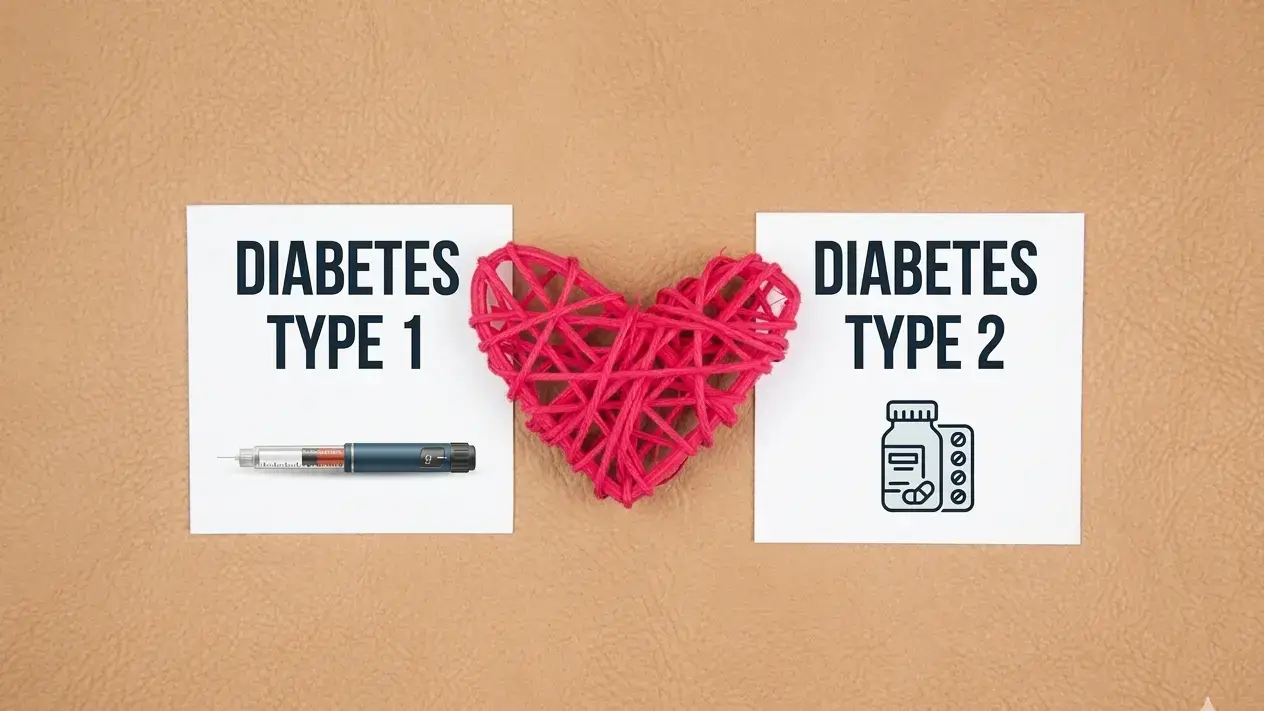
type 1 vs type 2 diabetes

Type 1 vs Type 2 Diabetes: 5 Key Differences | Dr. Ali Dubai

Living in a fast-paced city like Dubai often means balancing a high-pressure career with a vibrant social life. However, with the rising prevalence of metabolic health challenges in the UAE, understanding the nuances of type 1 vs type 2 diabetes is no longer just medical trivia. it is a vital component of proactive health management.

If you have been feeling unusually fatigued after a long day at the DIFC, or if you are concerned about a family history of “sugar,” this guide is designed to help you navigate the complexities of Diabetes Mellitus (the meaning of DM medical abbreviation). Before you head to a clinic for a formal consultation, let’s break down the science, the symptoms, and the critical differences between these two conditions.

What is Type 1 Diabetes and Type 2 Diabetes?

To understand what is type 1 diabetes and type 2 diabetes, we must first look at how our bodies process energy. Both conditions fall under the umbrella of type 1 vs type 2 diabetes mellitus, a group of metabolic diseases characterized by high blood glucose levels.

Type 1 Diabetes: The Insulin Deficiency

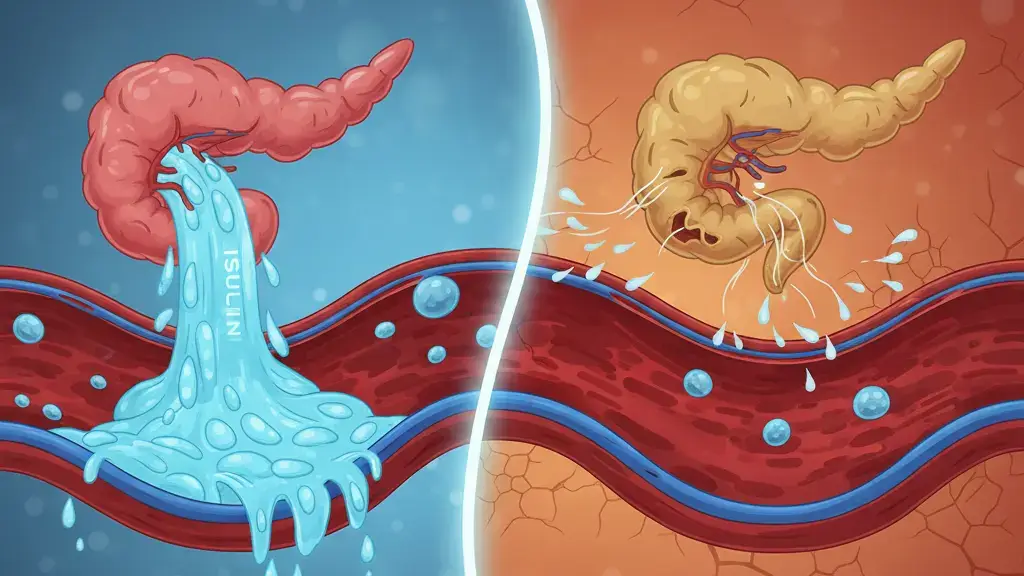
Type 1 diabetes is an autoimmune condition. In this scenario, the body’s immune system mistakenly attacks the insulin-producing beta cells in the pancreas. As a result, the body produces little to no insulin. It is often diagnosed in children and young adults, though it can appear at any age.

Type 2 Diabetes: The Insulin Resistance

Type 2 diabetes is primarily a metabolic disorder. Here, the body either does not produce enough insulin or, more commonly, the cells become resistant to insulin’s effects. This is the most common form of the disease, frequently linked to genetics and lifestyle factors.

type 1 diabetes and type 2 diabetes

Difference Between Type 1 Diabetes and Type 2 Diabetes

While both result in elevated blood sugar, the difference between type 1 diabetes and type 2 diabetes is fundamental.

  • Mechanism: Type 1 is an “autoimmune attack,” while Type 2 is “insulin resistance” and eventual exhaustion of the pancreas.
  • Onset: Type 1 usually develops rapidly over weeks. Type 2 often develops over many years and can be asymptomatic for a long time.
  • Insulin Dependence: People with Type 1 must take insulin for life. People with Type 2 may manage it with lifestyle and oral medications, though some eventually require insulin.

Read also about the fasting insulin test and discover its importance in diabetes diagnosis.

Different Characteristics of Type 1 and Type 2 Diabetes

When analyzing the characteristics of type 1 and type 2 diabetes, healthcare providers look at several clinical markers:

  • Body Weight: Type 1 patients are often at a healthy weight or have experienced sudden weight loss. Type 2 is frequently (though not always) associated with being overweight.
  • Ketones: Ketones are more commonly present at diagnosis in Type 1, which can lead to a dangerous state called Ketoacidosis.
  • Age of Diagnosis: Historically called “juvenile diabetes” (Type 1) and “adult-onset diabetes” (Type 2), though these terms are becoming outdated as Type 2 cases rise in younger populations.

Type 1 vs Type 2 Diabetes Symptoms

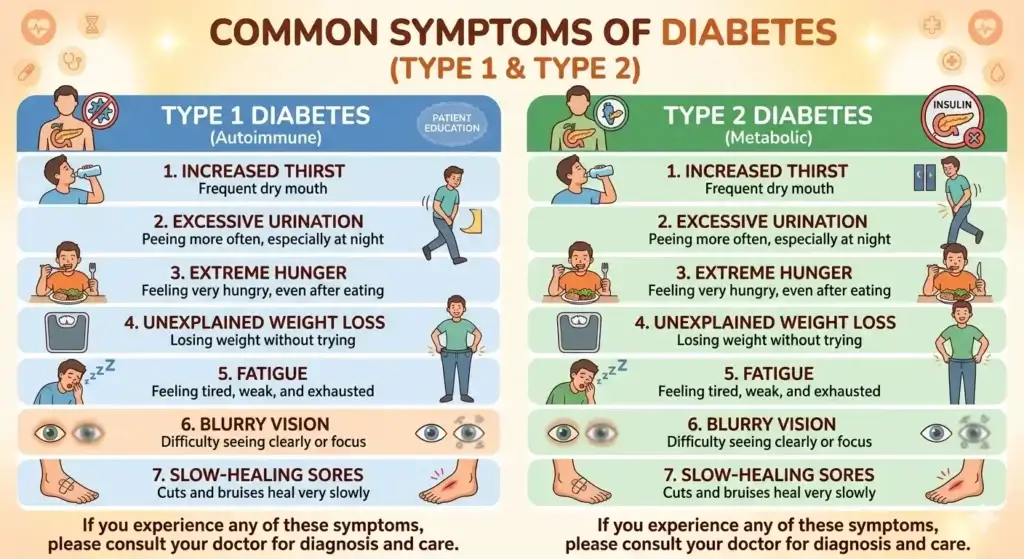
A common question many residents ask is: Are type 1 and type 2 diabetes symptoms the same? The answer is largely yes, but the intensity and speed of onset differ.

Shared Symptoms between type 1 and type 2 diabetes

  • Excessive Thirst (Polydipsia): Feeling like you can’t drink enough water.
  • Frequent Urination (Polyuria): Especially at night.
  • Unexplained Fatigue: Feeling drained despite resting.
  • Blurred Vision: High sugar levels can cause the lenses of the eyes to swell.

Distinct Patterns between type 1 and type 2 diabetes

Type 1 vs type 2 diabetes symptoms in Type 1 often include rapid weight loss and extreme hunger. In Type 2, symptoms may be so mild (like slow-healing sores or frequent skin infections) that they go unnoticed for years.

Type 1 vs Type 2 Diabetes symptoms

Type 1 vs Type 2 Diabetes: Causes and Risk Factors

Understanding type 1 vs type 2 diabetes causes helps in assessing your personal risk, especially in a region like the UAE where lifestyle transitions have impacted public health.

Type 1 diabetes Causes

  • Genetics: Specific HLA genes can increase susceptibility.
  • Environmental Triggers: Exposure to certain viruses or cold climates may trigger the autoimmune response in genetically predisposed individuals.

Type 2 diabetes causes

  • Sedentary Lifestyle: Lack of physical activity is a major driver in Dubai’s urban environment.
  • Dietary Habits: High intake of processed sugars and fats.
  • Ethnicity: Certain populations, including those of Middle Eastern descent, have a higher statistical risk.
  • Family History: If you are wondering type 1 vs type 2 diabetes which is genetic, both have genetic components, but Type 2 has a much stronger link to family history and lineage.

Type 1 vs Type 2 Diabetes Diagnosis

Diagnosing type 1 and type 2 diabetes involves several blood tests that measure type 1 vs type 2 diabetes glucose levels.

  1. HbA1c Test: Measures your average blood sugar over the past 2-3 months.
  2. Fasting Plasma Glucose (FPG): Taken after an overnight fast.
  3. Oral Glucose Tolerance Test (OGTT): Measures the body’s response to a sugary drink.
  4. Autoantibody Testing: This is the primary way for diagnosing type 1 and type 2 diabetes differences. If specific antibodies are present, it confirms Type 1.

If you are trying to figure out type 1 vs type 2 diabetes how to tell the difference at home, remember that home kits only measure current glucose, not the cause. Clinical testing is essential.

Read also about fasting blood sugar test and learn how to monitor you blood glucose level.

Type 1 vs Type 2 Diabetes Treatment

Management strategies vary significantly based on the diagnosis.

  • Type 1 Treatment: Continuous glucose monitoring (CGM) and multiple daily insulin injections or an insulin pump. Carbohydrate counting is a vital skill.
  • Type 2 Treatment: Focuses on metformin or other oral medications (like SGLT2 inhibitors or GLP-1 agonists), weight management, and specialized nutrition plans.

In the context of type 1 vs type 2 diabetes treatment, the goal for both is to maintain blood sugar within a target range to prevent long-term damage.

Type 1 vs Type 2 Diabetes Treatment

Prevention and Complications

Can it be prevented?

Currently, there is no known way to prevent Type 1. However, Type 2 is largely preventable or can be delayed through:

  • Maintaining a healthy BMI.
  • Engaging in 150 minutes of moderate exercise per week.
  • Choosing a diet rich in whole grains, lean proteins, and fiber.

Complications

Neglecting glucose control can lead to:

  • Cardiovascular disease (heart attacks and strokes).
  • Neuropathy (nerve damage, particularly in the feet).
  • Retinopathy (damage to the blood vessels in the retina).
  • Kidney failure.

When to See a Doctor in Dubai

If you experience sudden, extreme thirst, frequent trips to the bathroom, or blurred vision, you should seek medical advice immediately. Early intervention is the most effective way to prevent the complications mentioned above.

In a city with world-class medical facilities, you deserve a specialist who understands the local lifestyle and the latest global endocrine protocols.

Why Consult with Dr. Ali Aldibbiat?

Managing diabetes requires more than just a prescription; it requires a partnership. Dr. Ali Aldibbiat is a renowned consultant endocrinologist known for his empathetic approach and clinical precision.

  • Expertise in Complex Cases: Whether it’s difficult-to-manage Type 1 or lifestyle-reversal for Type 2.
  • Advanced Technology: Integration of the latest glucose monitoring tech.
  • Personalized Care: Tailored plans that fit the busy lifestyle of a Dubai professional.

Don’t wait for symptoms to worsen. Take control of your metabolic health today by booking a consultation with Dr. Ali Aldibbiat.

FAQ Section about type 1 vs type 2 diabetes

Which is more serious, diabetes 1 or 2?

Neither is “better” or “worse.” When people ask type 1 vs type 2 diabetes which is worse, they are often referring to the daily burden. Type 1 requires more immediate, intensive daily management (insulin), but Type 2 can lead to equally severe complications if left untreated. Both are serious medical conditions requiring lifelong care.

The most definitive way is through blood tests for C-peptide levels (which show how much insulin your body is making) and diabetes-specific autoantibodies.

No. While they both involve high blood sugar, their causes are entirely different (autoimmune vs. metabolic/lifestyle).

Type 4 is a relatively new term sometimes used by researchers to describe insulin resistance that develops in older, non-obese individuals, often linked to the natural aging process rather than weight.

Type 1 cannot be cured or prevented yet. Type 2 cannot be “cured” in the traditional sense, but many patients achieve “remission” through significant weight loss and lifestyle changes, where their blood sugar returns to normal without medication.

No. They have different causes. However, a person with Type 2 may eventually become “insulin-dependent” because their pancreas stops producing enough insulin over time.

Final word about type 1 vs type 2 diabetes

Navigating the world of type 1 vs type 2 diabetes can feel overwhelming, especially when trying to filter out misinformation. While Type 1 is an autoimmune challenge and Type 2 is often a metabolic one, both require a proactive, informed approach to ensure a long and healthy life.

By understanding the difference between type 1 diabetes and type 2 diabetes, you are taking the first step toward better health. Whether you are seeking a diagnosis or looking to optimize your current treatment, professional guidance is irreplaceable. Reach out to Dr. Ali Aldibbiat to ensure your health strategy is as advanced and dedicated as you are.

Share your love