

Fasting Insulin Level: Optimal Ranges with Dr. Ali in Dubai
Diabetes and metabolic disorders are becoming increasingly prevalent in modern society, particularly in fast-paced urban hubs like Dubai. For many, the fear...
 Written by
admin
Written by
admin

Diabetes and metabolic disorders are becoming increasingly prevalent in modern society, particularly in fast-paced urban hubs like Dubai. For many, the fear of a diabetes diagnosis is a source of significant anxiety. However, understanding your fasting insulin level is one of the most powerful tools you have for early detection and prevention.
While most people focus solely on blood sugar (glucose), your insulin levels often tell a much deeper story about your metabolic health years before a formal diabetes diagnosis occurs. In this guide, we will explore everything you need to know about the fasting insulin test, how to interpret your results, and how specialized care can help you regain control of your health.
What is Fasting Insulin?
To understand the fasting insulin level, we must first understand the role of insulin itself. Insulin is a vital hormone produced by the pancreas. Its primary job is to act as a “key” that opens your cells, allowing glucose (sugar) from the food you eat to enter and be used for energy.
A “fasting” insulin measurement is taken after you have not eaten for at least 8 to 12 hours. During this period, your body isn’t processing new sugar from a meal, so the test measures the “baseline” amount of insulin your pancreas needs to circulate to keep your blood sugar stable.
Why the "Fasting" Part Matters
When you eat, insulin naturally spikes. By testing in a fasted state, doctors can see how hard your pancreas is working when the body is at rest. If your baseline is high, it indicates that your body is struggling to manage even its own internal glucose production.

The Metabolic Insulin Problem: When It Goes Wrong
In a healthy body, insulin and glucose exist in a delicate balance. However, this system can break down, leading to a state known as hyperinsulinemia (excessively high insulin) or hypoinsulinemia (insufficient insulin).
Hyperinsulinemia and Insulin Resistance
The most common metabolic “glitch” in the modern world is insulin resistance. This happens when your cells stop responding effectively to insulin. To compensate, your pancreas pumps out more and more insulin to force the cells to accept glucose.
At this stage, your blood sugar might still look “normal” on a standard test, but your fasting insulin level high readings would reveal that your system is under immense strain. Eventually, the pancreas can no longer keep up, and blood sugar levels begin to rise, leading to prediabetes and Type 2 diabetes.
Read more about: fasting blood sugar test and learn how to prepare for it.
Metabolic Insulin Problem Symptoms
If your fasting insulin level is high, you might experience:
- Acanthosis Nigricans: Darkened patches of skin, usually around the neck or armpits.
- Frequent Hunger: Especially cravings for sweets or carbs shortly after eating.
- Abdominal Weight Gain: Difficulty losing fat around the midsection.
- Fatigue: Feeling “crashed” after a high-carb meal.
- Skin Tags: Small growths of skin on the neck or torso.
Risk Factors for Metabolic Insulin Problems
Living in a city like Dubai often involves a sedentary lifestyle, high-stress environments, and easy access to processed foods. all of which are significant risk factors.
Common risks include:
- Excess Body Weight: Particularly visceral fat (fat stored around the abdomen).
- Physical Inactivity: Muscles are the primary consumers of glucose; without movement, insulin efficiency drops.
- Dietary Habits: High intake of refined carbohydrates, sugary drinks, and ultra-processed foods.
- Genetics: A family history of Type 2 diabetes or metabolic syndrome.
- Age: Metabolic flexibility often decreases as we get older.
- Polycystic Ovary Syndrome (PCOS): A common condition in women that is intrinsically linked to insulin issues.

The Connection Between Insulin Resistance and Diabetes
There is a common misconception that diabetes happens overnight. In reality, it is often the final stage of a long-term decline in insulin sensitivity.
- Stage 1 (Silent Insulin Resistance): Your fasting insulin level begins to rise, but your blood sugar stays normal.
- Stage 2 (Hyperinsulinemia): High levels of insulin begin to cause weight gain, fatigue, and inflammation.
- Stage 3 (Prediabetes): The pancreas begins to tire, and blood sugar levels start to creep up.
- Stage 4 (Type 2 Diabetes): The system fails to regulate glucose, requiring medical intervention.
By identifying a low insulin fasting level (common in Type 1 or late-stage Type 2) or a high level early on, you can effectively pause or even reverse this progression.
What is Insulin Sensitivity?
Insulin sensitivity refers to how “thin” the “key” is. If you are highly insulin sensitive, your body only needs a tiny amount of insulin to move glucose into your cells. This is the hallmark of great metabolic health.
When sensitivity decreases, you become “insulin resistant.” Improving sensitivity is the primary goal of any diabetes prevention plan.
Treatment Options: How to Reverse Insulin Resistance
The good news is that high normal insulin levels can often be brought back to optimal ranges through lifestyle intervention:
- Low-Glycemic Eating: Focus on whole foods that don’t cause massive glucose spikes.
- Strength Training: Building muscle increases the number of “glucose “ports” in your body, making insulin’s job easier.
- Intermittent Fasting: Giving your body longer windows without food allows insulin levels to drop to their baseline.
- Medical Guidance: In some cases, medications like metformin may be used alongside lifestyle changes.
What is the Fasting Insulin Test?
The fasting insulin test (other common fasting insulin level test name: Serum Insulin Test) is a simple blood draw. Unlike the A1c test, which measures your average blood sugar over three months, the insulin test looks specifically at the hormone driving that sugar.
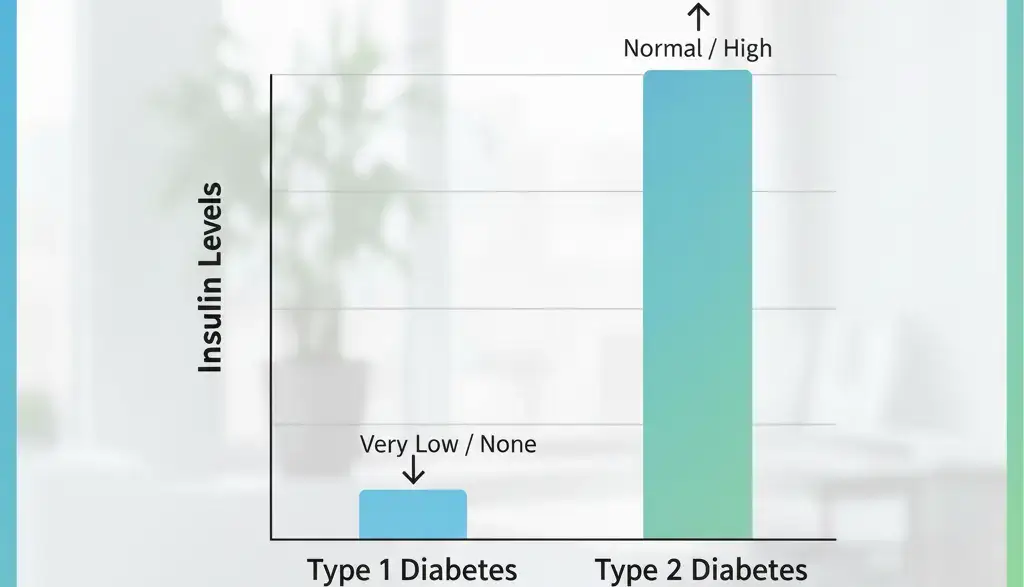
Fasting Insulin Level in Type 1 Diabetes vs. Type 2
- Type 1 Diabetes: The fasting insulin level in Type 1 diabetes is typically very low or undetectable because the pancreas has stopped producing insulin entirely.
- Type 2 Diabetes: In the early to middle stages, the level is usually high (insulin resistance). In very advanced stages, it may become low as the pancreas becomes “exhausted.”
Importance of the Fasting Insulin Test
Why bother with an insulin test if you’ve already checked your blood sugar?
The importance of the fasting insulin test lies in its role as an “early warning system.” Glucose is a lagging indicator—it’s the last thing to break. Insulin is a leading indicator—it’s the first thing to change. By monitoring insulin, you can catch metabolic dysfunction up to a decade before blood sugar rises.
How to Prepare for a Fasting Insulin Blood Test
To ensure your fasting insulin level range is accurate, proper preparation is essential:
- Fast for 8–12 Hours: Do not consume food or any drinks other than water.
- Avoid Strenuous Exercise: Heavy lifting or intense cardio the night before can temporarily alter insulin sensitivity.
- Review Medications: Some medications, like steroids or birth control pills, can affect results. Always inform your clinician about what you are taking.
- Stay Hydrated: Drinking water makes the blood draw easier and does not affect insulin levels.
During Ramadan, dates are a tradition we are accustomed to having at Iftar. But can diabetics eat dates? Expert Advice from Dr. Ali.
Procedure: How is Fasting Insulin Measured?
The procedure is straightforward and mirrors most standard blood tests:
- The Draw: A healthcare professional will insert a small needle into a vein in your arm.
- Sample Collection: A small amount of blood is collected into a vial.
- Laboratory Analysis: The sample is sent to a lab where the concentration of insulin is measured, usually in micro-international units per milliliter (µIU/mL) or picomoles per liter (pmol/L).
Fasting Insulin Level Test Cost
In Dubai, the fasting insulin level test cost can vary depending on the clinic and whether it is part of a larger metabolic panel. Generally, it is an affordable diagnostic tool, often ranging between 150 AED to 450 AED. However, the value it provides in preventing long-term chronic illness is immeasurable.

Understanding the Results: Normal Fasting Insulin Levels
Interpreting your fasting insulin level range can be confusing because “lab normal” is not always the same as “optimally healthy.”
Note: What is a normal insulin level for a woman may vary slightly during different phases of the menstrual cycle or during pregnancy, but the general markers for insulin resistance remain consistent.
Factors That Affect Fasting Insulin Levels
Several variables can influence your test results:
- Sleep Deprivation: Even one night of poor sleep can temporarily spike insulin resistance.
- Stress: High cortisol levels trigger the liver to release sugar, which in turn raises insulin.
- Recent Illness: Inflammation from a cold or flu can skew results.
- Time of Day: Most doctors recommend testing in the morning to maintain consistency.
Tips to Keep Insulin Levels Normal
Maintaining healthy levels in a city like Dubai requires intention:
- Walk after meals: A 10-minute stroll around the block or mall can significantly lower the post-meal insulin response.
- Prioritize Fiber: Fiber slows down the absorption of sugar.
- Manage Stress: Practices like yoga or meditation are not just for mental health; they are metabolic tools.
- Regular Screening: Don’t wait for symptoms to appear.
Take Control of Your Health with Dr. Ali Aldibbiat
Navigating the complexities of hormones and metabolic health requires more than just a lab test; it requires expert interpretation and a personalized roadmap. Dr. Ali Aldibbiat is a renowned consultant endocrinologist in Dubai, specializing in the management and reversal of insulin-related disorders.
By booking a consultation with Dr. Ali Aldibbiat, you benefit from:
- Comprehensive Metabolic Analysis: Looking beyond simple glucose tests to find the root cause of your symptoms.
- Personalized Treatment Plans: Tailored advice on diet, lifestyle, and medical intervention suited to the Dubai lifestyle.
- Empathetic Care: Understanding the anxiety that comes with diabetes risk and providing a clear, supportive path forward.
Don’t wait for a diagnosis to change your life. Book your consultation with Dr. Ali Aldibbiat today and take the first step toward optimal metabolic health.
FAQ Section
What is a normal fasting insulin level?
While laboratories often list up to 18 or 25 µIU/mL as “normal,” many functional medicine experts and endocrinologists consider an optimal normal fasting insulin level to be between 2 and 6 µIU/mL.
What do fasting insulin levels tell you?
They tell you how hard your pancreas is working. A high level suggests insulin resistance (the precursor to Type 2 diabetes), while an extremely low level might suggest an inability to produce insulin (Type 1 diabetes).
What fasting insulin level is prediabetes?
There is no single “prediabetes” number for insulin, but levels consistently above 10–12 µIU/mL are a strong indicator that you are on the path toward prediabetes, even if your glucose is currently normal.
How to reduce fasting insulin levels?
Reducing refined sugar, increasing physical activity (especially resistance training), improving sleep quality, and managing stress are the most effective ways to lower insulin.
Will I need to do anything to prepare for the test?
Yes, you must fast (no food or drink except water) for 8 to 12 hours before the blood draw.
Are there any risks to the test?
The risks are minimal and the same as any standard blood test, including slight bruising or lightheadedness at the injection site.
Why is insulin tested fasted?
Insulin is tested fasted to establish a “baseline.” Since food triggers insulin release, testing after a meal would only show your response to that specific food, not your body’s overall metabolic efficiency.
Final word about the fasting insulin level
Understanding your fasting insulin level is perhaps the single most important step you can take in the journey toward diabetes prevention. By looking at the hormone itself, rather than just the sugar it regulates, you gain a years-long head start on protecting your health.
Whether you are concerned about a family history of diabetes or are experiencing symptoms of insulin resistance, professional guidance is essential. Working with an expert like Dr. Ali Aldibbiat ensures that your results are interpreted with precision and that your health plan is as unique as you are.
Take the guesswork out of your metabolic health. Consult with Dr. Ali Aldibbiat and ensure your insulin levels are working for you, not against you.
References
- Mayo Clinic: Diabetes Diagnosis and Treatment
- National Institutes of Health (PMC): Hyperinsulinemia and Insulin Resistance Dynamics
- MedlinePlus: Insulin in Blood Test Overview
- American Diabetes Association: Understanding Insulin Resistance