

Dr. Ali Aldibbiat - Endocrinology Consultant Dr. Ali Aldibbiat - Endocrinology Consultant Book Consultation
Specialist Pituitary Tumour Diagnosis and Treatment in Dubai

Pituitary Adenoma Treatment in Dubai: Pituitary Tumour Care by Dr. Ali Aldibbiat

Pituitary adenomas are benign tumours that range from harmless incidental findings to hormone-secreting or growing lesions requiring active treatment. The first step is not automatically surgery—it is accurate classification by hormone function, tumour size, relationship to the optic pathways, and behaviour over time.

20+ Years Clinical Experience FRCP London FRCP Edinburgh PhD Researcher FACE Associate Professor Jumeirah, Dubai
PITUITARY MRI · CLASSIFICATION VIEW DR ALI · DX
Pituitary imaging and specialist MRI assessment
Diagnostic target Pituitary · Optic Chiasm · Cavernous Sinus
Up to 10% incidentally identified on brain imaging
01 · Size Micro vs Macro <10 mm / ≥10 mm
02 · Function Hormone Status Functioning / Non-functioning
03 · Behaviour Pressure & Growth Optic chiasm · Serial MRI
Classification comes before treatment

What Is a Pituitary Adenoma?

A pituitary adenoma is a benign, non-cancerous tumour arising from the pituitary gland—a small gland at the base of the brain that regulates multiple hormone systems throughout the body.
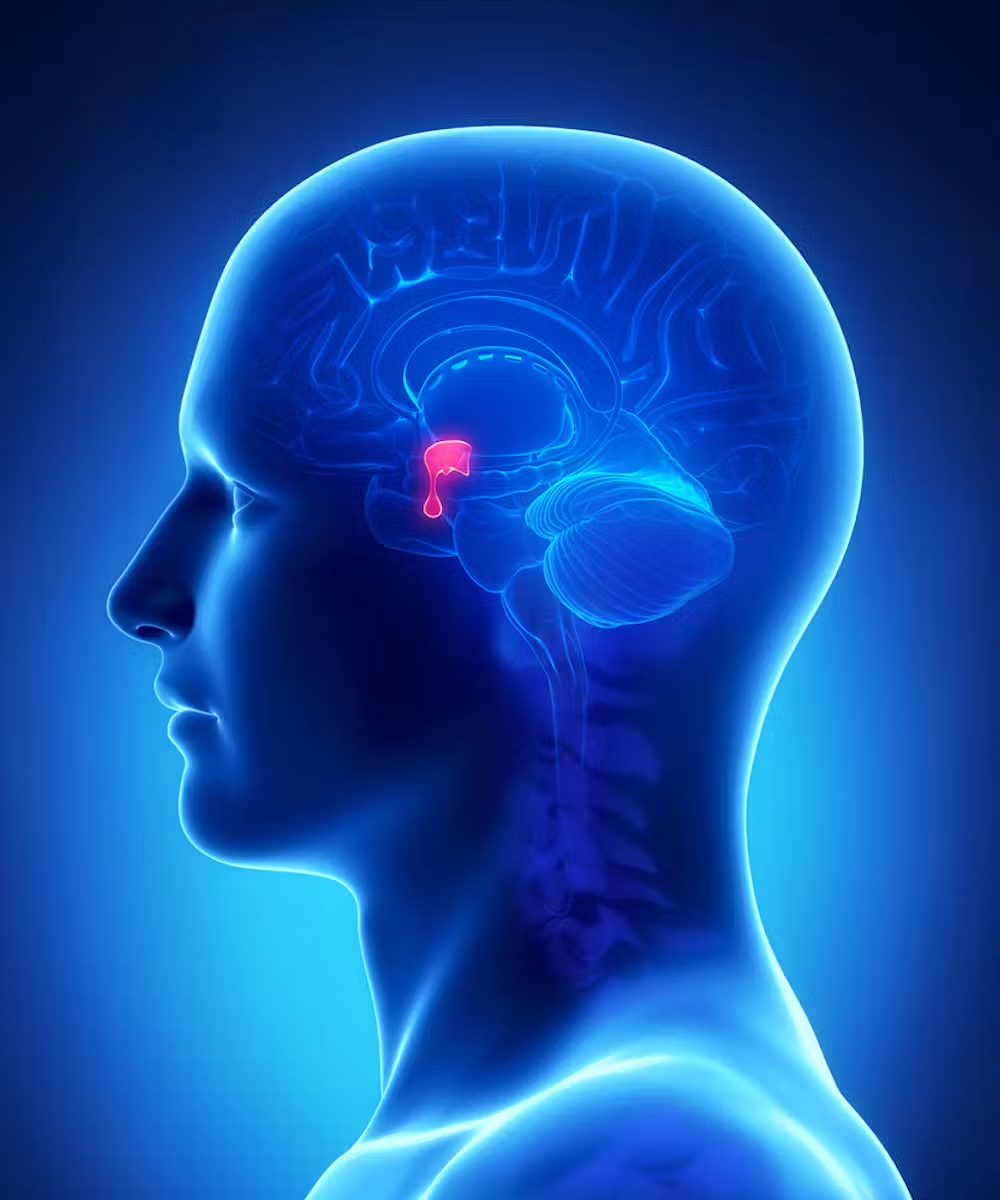
Pituitary Adenoma BENIGN
Pituitary gland and brain specialist assessment
Most do not require immediate treatment The key is deciding which adenomas are clinically important.

Small non-functioning adenomas are commonly monitored rather than treated. Active management becomes important when a tumour secretes excess hormone, compresses surrounding structures, or demonstrates progressive growth.

01
First question

How Large Is It?

Size determines whether the lesion is classified as a microadenoma or macroadenoma and helps define the risk of pressure on surrounding structures.

< 10 mm Microadenoma ≥ 10 mm Macroadenoma
02
Second question

Does It Secrete Hormone?

Functioning adenomas produce excess hormone and can cause conditions such as hyperprolactinemia, Cushing's disease, or acromegaly. Non-functioning adenomas do not.

Functioning Non-functioning
03
Third question

Is It Growing or Compressing?

MRI surveillance evaluates change over time and determines whether the adenoma threatens the optic chiasm or surrounding normal pituitary tissue.

Stable Growing Pressure Effect
Clinical rule Treat the adenoma only after its size, hormonal function, and behaviour have been classified.
One gland · several distinct disease pathways

Types of Pituitary Adenomas Treated in Dubai

The label “pituitary adenoma” is not a single diagnosis. Management changes substantially depending on which hormone is produced, whether the adenoma is non-functioning, and whether pressure effects are present.

Pituitary MRI assessment for non-functioning adenoma
01 Most common incidental category

Non-Functioning Pituitary Adenomas

These adenomas produce no excess hormone and are often discovered incidentally. Small lesions are usually monitored with serial MRI. Macroadenomas require closer assessment for growth, visual field compromise, and pressure on normal pituitary tissue.

Observation Serial MRI Visual Fields
02 Most common functioning adenoma

Prolactinoma

Prolactin-secreting adenomas can cause menstrual disturbance, galactorrhoea and infertility in women, and erectile dysfunction or low testosterone in men.

Typical first-line pathway Cabergoline · Medical First
Explore Hyperprolactinemia ↗
ACTH
03 · Cushing's disease

ACTH-Secreting Adenomas

Excess ACTH drives cortisol overproduction. Diagnosis requires biochemical confirmation before attributing Cushing's syndrome to a pituitary lesion, because incidental microadenomas are common.

Cushing's Syndrome →
GH
04 · Acromegaly

Growth Hormone-Secreting Adenomas

Excess growth hormone causes gradual enlargement of hands, feet, and facial features, joint symptoms, and increased metabolic risk. IGF-1 is the primary screening test.

Symptoms depend on size and function

Symptoms of Pituitary Adenomas

Pituitary adenoma symptoms usually arise through one of two mechanisms: hormone excess from a functioning adenoma, or pressure effects from a larger tumour compressing the optic pathways or normal pituitary tissue. Small non-functioning microadenomas may cause no symptoms at all.

Lens A Mass Effect
Patient discussing headache and visual symptoms
Classic macroadenoma clue

Peripheral Vision Loss

Compression of the optic chiasm can produce bitemporal hemianopia— loss of peripheral vision on both sides—which may progress gradually and go unnoticed until formal visual-field testing.

Mass effect

Persistent Headaches

Larger adenomas can cause pressure-like headaches. Headache occurring with visual change or hormonal symptoms warrants prompt pituitary evaluation.

Compression of normal pituitary tissue

Hormonal Deficiency

Compression can cause hypopituitarism with symptoms such as fatigue, low blood pressure, cold intolerance, low libido, or menstrual disturbance depending on the affected hormone axis.

Functioning adenoma

Excess Hormone Symptoms

Prolactinomas may cause menstrual irregularity, galactorrhoea, infertility or low testosterone. ACTH excess produces Cushing's-like features, while growth hormone excess causes progressive enlargement of hands, feet, and facial features.

Important contrast

Sometimes There Are No Symptoms

Many small non-functioning adenomas are discovered incidentally during brain imaging for unrelated reasons and may never cause a clinical problem.

A symptom alone does not define the adenoma Hormone testing + MRI anatomy + formal visual fields determine the real clinical significance.
Discuss Your Symptoms →
Know what needs same-day care and what needs structured follow-up

When Should You See a Doctor for a Pituitary Adenoma?

A pituitary adenoma may be an incidental finding requiring planned surveillance, or it may produce symptoms that require urgent neuroendocrine assessment. The urgency depends on visual symptoms, sudden neurological change, hormone effects, and evidence of tumour growth.

SAME-DAY ASSESSMENT URGENT
Urgent neuroendocrine and hospital assessment
Possible pituitary apoplexy

Sudden Severe Headache + Visual Change

A sudden severe headache with visual disturbance or double vision may indicate pituitary apoplexy, a neuroendocrine emergency that requires same-day medical assessment.

01 Prompt Specialist Review

Progressive Peripheral Vision Loss

Progressive bitemporal visual field loss may indicate a macroadenoma compressing the optic chiasm and requires urgent pituitary assessment and treatment planning.

Optic chiasm risk
02 Reassessment Needed

Known Adenoma + New Hormonal Symptoms

New fatigue, low blood pressure, cold intolerance, low libido, or menstrual change in someone with a known pituitary adenoma may indicate new pituitary hormone deficiency from compression.

Hypopituitarism screen
03 Functional Assessment

Symptoms of Hormone Excess

Irregular periods, galactorrhoea, enlarging hands or feet, Cushing's-like physical changes, or unexplained hormonal abnormalities require full functional pituitary classification.

Functioning adenoma?
04 Imaging Reassessment

Growth on Serial MRI

A pituitary adenoma that shows interval growth on repeat MRI needs reassessment of the treatment plan even if it was initially managed conservatively.

Behaviour changed
05 Planned Baseline Review

Incidentally Found Small Adenoma

A small non-functioning microadenoma without symptoms still requires a baseline pituitary hormone panel and a planned follow-up MRI rather than being dismissed without classification.

Monitor correctly
Not sure how urgent your finding is? MRI findings should be interpreted together with symptoms and pituitary hormone testing.
Discuss Your MRI →
Why functioning or growing adenomas cannot be ignored

Complications of Untreated Pituitary Adenomas

Most pituitary adenomas are harmless, but a functioning adenoma or one that continues to grow can produce permanent visual, hormonal, neurological, and systemic consequences.

FRAME 01
Vision testing and optic pathway assessment
Optic pathway

Permanent Visual Loss

Continued macroadenoma growth can progressively compress the optic chiasm. Early decompression often allows significant recovery, while delayed treatment may leave permanent visual field loss.

FRAME 02
Hormonal laboratory monitoring
Normal gland compression

Hypopituitarism

Continued compression of normal pituitary tissue can lead to deficiency of thyroid, cortisol, growth hormone, and reproductive hormone axes, causing substantial fatigue and metabolic disturbance.

FRAME 03
Emergency hospital assessment
Neuroendocrine emergency

Pituitary Apoplexy

Sudden haemorrhage or infarction within an adenoma can cause severe headache, visual loss, and acute adrenal insufficiency, requiring urgent steroid replacement and sometimes surgical decompression.

FRAME 04
Pituitary hormone excess assessment
Functioning adenoma

Progression of Hormone Excess

Untreated Cushing's disease, acromegaly, or hyperprolactinemia allows the underlying hormone excess to continue and can lead to cardiovascular disease, osteoporosis, infertility, and other complications.

The clinical goal Detect growth, hormone excess, or pressure effects before the consequences become irreversible.
Biochemistry + anatomy + vision + behaviour

How Pituitary Adenomas Are Diagnosed in Dubai

Every pituitary adenoma needs the same structured evaluation: determine whether it secretes hormone, define its anatomy on MRI, assess the optic pathways when needed, and establish whether it is stable or growing over time.

Biochemical evidence

Complete Pituitary Hormone Panel

Prolactin, ACTH and cortisol, IGF-1, TSH and free T4, and LH/FSH with estradiol or testosterone determine whether the adenoma is functioning and whether normal pituitary function has been affected.

Prolactin ACTH / Cortisol IGF-1 TSH / FT4 LH / FSH
Anatomical evidence

Pituitary MRI With Gadolinium Contrast

MRI characterises adenoma size, distinguishes microadenoma from macroadenoma, and shows the relationship to the optic chiasm and cavernous sinus.

Anatomy defines treatment risk
Functional vision evidence

Formal Visual Field Testing

Visual fields are performed when a macroadenoma is close to or touching the optic chiasm, establishing a baseline before treatment and allowing objective follow-up afterward.

Optic pathway baseline
Behaviour over time

Serial Imaging for Monitoring

Non-functioning microadenomas that do not require immediate intervention are monitored with repeat MRI, typically at one year initially, then less frequently if stable.

Stable vs growing
Diagnostic endpoint Every result feeds one decision:
Monitor Medical Treatment Surgery Long-Term Surveillance
Treatment follows adenoma type and behaviour

Pituitary Adenoma Treatment in Dubai: Monitoring, Medication, and Surgery

Pituitary adenoma treatment is matched to the specific adenoma. Small non-functioning microadenomas may need monitoring only, prolactinomas usually respond to cabergoline, and functioning adenomas such as Cushing's disease or acromegaly often require transsphenoidal surgery.

Classified pituitary adenoma Choose the correct clinical route Function · Size · Vision · Growth
01
Stable non-functioning microadenoma

Conservative Monitoring

Small, asymptomatic, non-functioning microadenomas are usually followed with periodic MRI and hormone panels rather than treated immediately. Many never require active intervention.

Repeat MRI Hormone Panel Watch Growth
02
Prolactin-secreting adenoma

Medical Treatment With Cabergoline

Cabergoline is first-line treatment for prolactinomas and can normalise prolactin and shrink the tumour in the large majority of patients without surgery.

See Hyperprolactinemia Management ↗
03
Hormone excess or visual compromise

Transsphenoidal Surgery

Surgery is the standard first-line approach for Cushing's disease and acromegaly requiring intervention and for macroadenomas causing visual compromise. The approach is performed through the nasal passage.

Pre-operative hormone optimisation Post-operative endocrine monitoring
04
Persistent or recurrent disease

Medical Therapy After Incomplete Control

Residual or recurrent disease may require somatostatin analogues for acromegaly, steroidogenesis inhibitors for Cushing's disease, or continued cabergoline for prolactinomas with incomplete response.

Every route returns to surveillance Long-Term Pituitary Monitoring

Follow-up may include periodic hormone panels, MRI for residual or treated adenomas, visual field testing where the optic chiasm was previously compressed, and monitoring for hypopituitarism after surgery.

Discuss Treatment Options →
Fact-checked specialist pituitary care

Why Choose Dr. Ali Aldibbiat for Pituitary Adenoma Treatment in Dubai?

Pituitary adenoma care depends on precise classification. The clinical challenge is not simply identifying a lesion on MRI, but distinguishing an incidental finding from a functioning tumour, a growing macroadenoma, or a lesion requiring surgical intervention.

Consultant endocrinologist Dr. Ali Aldibbiat
Consultant Endocrinologist Dr. Ali Aldibbiat Pituitary · Hormonal · Metabolic Medicine
01
First consultation

Complete Functional Classification

Every newly identified pituitary adenoma is assessed with the complete hormone panel rather than a single isolated result, helping identify subtle functioning adenomas while avoiding unnecessary investigation of non-functioning lesions.

02
Treatment selection

Surgery Only When the Adenoma Requires It

Adenomas requiring surgical referral are distinguished from those better managed with observation or medical treatment such as cabergoline.

03
Long-term pathway

Structured Surveillance After Diagnosis or Treatment

Whether managed surgically, medically, or conservatively, pituitary adenomas require an individualised follow-up plan to detect recurrence, growth, or new hormone deficiency.

Clinical principle The correct treatment is determined by the adenoma—not by the fact that an MRI happens to show one.
Complete hormone panel + MRI classification Specialist pituitary evaluation in Jumeirah, Dubai.
Book Pituitary Consultation →
Patient perspectives

What Our Patients Say

Read All Reviews ↗
01
F
Faten Google Review
“I would like to thank Dr. Ali Aldibbiat. He is an exceptional doctor, highly experienced in his specialty, and fully dedicated to his patients' healing.”
★★★★★
02
A
Ahmed Alblooshi Dubai · Google Review
“The hospital has very great services and experienced doctors. Thanks to Dr. Ali Aldibbiat, he knew my issues from the first time. Although I have been to many places, no one could find what I was going through.”
★★★★★
03
N
Noel Miranda Google Review
“I visit Dr. Ali AlDibbiat, the endocrinologist here, who is excellent and very patient. His treatment has significantly improved my diabetes control.”
★★★★★
Clear answers before treatment decisions

Frequently Asked Questions: Pituitary Adenoma Treatment in Dubai

01

What is a pituitary adenoma and is it dangerous?

A pituitary adenoma is a benign, non-cancerous tumour of the pituitary gland. Most do not spread to other organs. They can, however, cause problems through excess hormone production, deficiency of normal pituitary hormones from compression, or pressure on the optic pathways causing visual field loss. Many small non-functioning adenomas are harmless and need monitoring rather than active treatment.

02

Do all pituitary adenomas need surgery?

No. Most pituitary adenomas, particularly small non-functioning microadenomas, are managed with periodic monitoring alone. Prolactin-secreting adenomas often respond very well to cabergoline without surgery. Surgery is generally reserved for adenomas causing important hormone excess, visual compression, progressive growth, or disease not adequately controlled medically.

03

What are the symptoms of a pituitary adenoma?

Symptoms depend on tumour size and whether the adenoma is functioning. Hormone-secreting adenomas may cause irregular periods and galactorrhoea, Cushing's-related features, or enlargement of hands and feet. Larger adenomas can cause headaches, visual field loss, and pituitary hormone deficiency. Small adenomas may cause no symptoms at all.

04

How is a pituitary adenoma diagnosed?

Diagnosis combines a complete pituitary hormone panel with a dedicated pituitary MRI to assess tumour size and location. Formal visual field testing is performed when the adenoma is close to the optic chiasm.

05

Can a pituitary adenoma come back after treatment?

Yes. Recurrence can occur after surgical or medical treatment, which is why long-term surveillance is important. The source notes that Cushing's disease can recur in 20–30% of patients within 10 years after surgery, while prolactinomas can regrow if cabergoline is stopped without careful assessment.

06

Which doctor should I see for a pituitary adenoma in Dubai?

A consultant endocrinologist is the appropriate specialist for pituitary adenoma evaluation and treatment. Dr. Ali Aldibbiat provides classification, hormonal assessment, monitoring, medical treatment, and surgical pathway coordination at 109 Century Plaza, Jumeirah Beach Road, Jumeirah 1, Dubai.

Have an MRI report or hormone result? Bring the imaging and hormone results together—pituitary decisions depend on both.
Ask About Your Results →
Specialist pituitary care across Dubai and the UAE

Pituitary Adenoma Specialist Near Me: Dubai and UAE Service Areas

Patients attend from across the UAE Service Areas
Jumeirah Downtown Dubai DIFC Dubai Marina Deira Bur Dubai JBR Al Quoz Mirdif Abu Dhabi Sharjah
PITUITARY
Expert classification · monitoring · surgical coordination

Start Your Pituitary Adenoma Treatment Journey in Dubai

Complete pituitary hormone assessment, MRI-guided classification, medical treatment, surgical pathway coordination, and structured long-term surveillance.

Book Appointment →
Vitality Health Calculator Patient Connection Hub