

Blood Sugar Monitor Guide: Types, Accuracy, and Expert Selection
Written by Dr. Ali Aldibbiat, Consultant Endocrinologist in Dubai, specializing in advanced diabetes management, metabolic therapies, and wearable medical technology. Selecting the...
 Written by
Dr Ali Aldibbiat
Written by Dr. Ali Aldibbiat, Consultant Endocrinologist in Dubai, specializing in advanced diabetes management, metabolic therapies, and wearable medical technology.
Selecting the right blood sugar monitor is a fundamental step in protecting your metabolic health and preventing long-term diabetic complications. Whether you need a standard capillary fingerstick meter or an advanced continuous sensor, tracking glucose trends guides everyday insulin and dietary choices. This clinical guide breaks down device mechanics, accuracy standards, and practical selection criteria to help you navigate modern glucose monitoring with clarity and confidence.
Key Takeaways
- Traditional fingerstick glucometers measure capillary blood glucose, whereas continuous glucose monitors (CGMs) measure glucose within interstitial fluid.
- Interstitial fluid dynamics create a natural 5- to 15-minute physiological lag behind capillary blood during rapid glucose changes.
- Mean Absolute Relative Difference (MARD) is the international clinical benchmark for sensor accuracy; lower scores indicate superior precision.
- Non-invasive optical smartwatches claiming needle-free glucose monitoring remain unapproved and present severe clinical risks for treatment decisions.
- Accurate monitoring requires tailored device pairing based on whether you manage Type 1 diabetes, insulin-dependent Type 2 diabetes, or prediabetes.
What Is a Blood Sugar Monitor and How Does It Function?
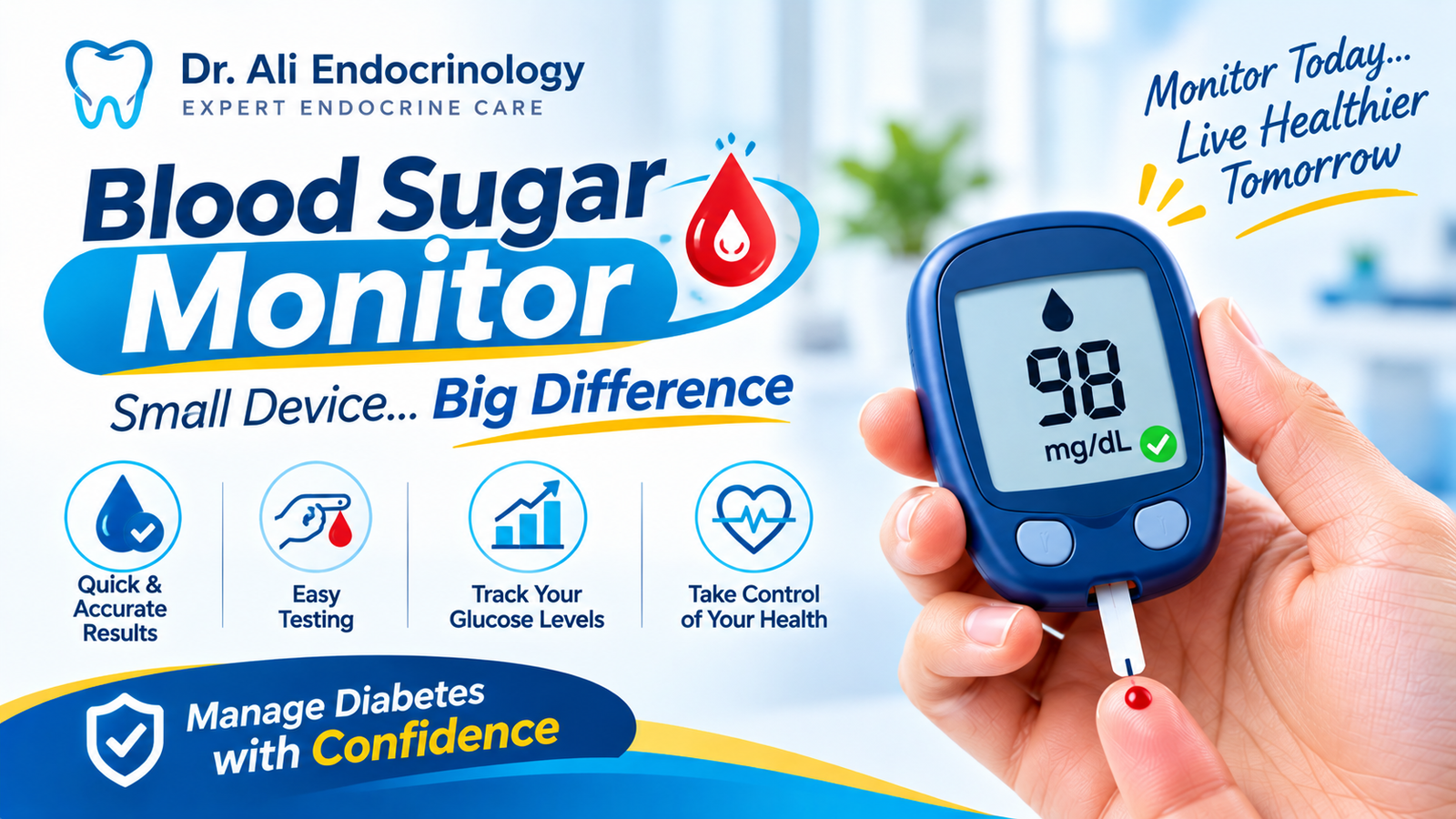
A blood sugar monitor is an electronic medical device engineered to measure the concentration of glucose circulating in your body. Routine glucose testing provides the real-time data required to balance nutrition, physical activity, and pharmacological therapies safely.
Modern clinical practice relies on two primary sampling environments to evaluate glucose levels:
- Capillary whole blood: Sampled from small capillaries in the fingertip using a sterile lancet and an electrochemical test strip.
- Interstitial fluid, which means the clear liquid surrounding your cells beneath the skin: Sampled continuously from the fluid surrounding subcutaneous adipose tissue cells via a tiny, flexible filament inserted beneath the skin.
How capillary blood glucose meters analyze whole blood
Traditional blood glucose meters (BGMs) utilize enzyme-coated single-use test strips. When whole blood touches the strip, glucose reacts with an embedded enzyme such as glucose oxidase or glucose dehydrogenase.
This biochemical reaction generates a minute electrical current directly proportional to the glucose level. The meter’s internal microprocessor quantifies this current and translates it into a digital numerical reading within five seconds.
How continuous sensors measure interstitial fluid
Continuous glucose monitors use an enzymatic sensor filament placed into subcutaneous fat. Glucose in the surrounding interstitial fluid diffuses across a semipermeable membrane, which is a thin barrier that allows specific molecules to pass through, to generate an electrical signal.
A miniature transmitter attached to the sensor surface records these signals every one to five minutes. It transmits continuous readings, historical trend graphs, and predictive rate-of-change arrows wirelessly to a dedicated receiver or smartphone app.
Types of Blood Sugar Monitors: Traditional Glucometers vs Continuous Monitors
Deciding between a conventional fingerstick meter and a wearable sensor depends on your clinical diagnosis, therapy regimen, and daily routine. Reviewing our continuous glucose monitoring guide can help clarify how these wearable tools fit into daily life.
Each device category offers distinct operational benefits and considerations for long-term metabolic care.
| Feature / Dimension | Traditional Fingerstick Meter (BGM) | Continuous Glucose Monitor (CGM) | Flash Glucose Monitor (FGM) |
|---|---|---|---|
| Sample Fluid | Capillary whole blood (fingertip) | Subcutaneous interstitial fluid | Subcutaneous interstitial fluid |
| Measurement Frequency | Intermittent (single moment in time) | Automated every 1 to 5 minutes | Automated or on-demand scan |
| Physiological Lag | Zero (real-time capillary value) | 5 to 15 minutes behind capillary blood | 5 to 15 minutes behind capillary blood |
| Hypoglycemia Alarms | None (cannot detect nocturnal lows) | Customizable real-time audio and vibration alerts | Threshold alarms on modern versions |
| Calibration Required | Factory coded or test-strip auto-coded | Most modern sensors are factory-calibrated | Factory-calibrated (no fingerstick codes) |
| Discreet Usability | Low (requires lancets, strips, and sharps disposal) | High (viewable on smartphone or watch) | High (scanned discreetly via NFC or Bluetooth) |
| Primary Cost Driver | Recurring purchases of test strips and lancets | Bi-weekly or monthly sensor replacements | Bi-weekly sensor replacements |
| Ideal Candidate | Stable Type 2 diabetes on lifestyle/oral drugs | Type 1 diabetes, insulin users, severe hypoglycemia | Active individuals, gestational or Type 2 diabetes |
Why is my CGM reading totally different from my fingerstick blood sugar?
This discrepancy is one of the most common concerns voiced by patients in our clinical practice. A continuous blood sugar monitor reads interstitial fluid, not arterial or capillary blood.
Think of glucose movement like a train with two carriages:
- Glucose enters the bloodstream first after meals (the locomotive engine).
- It then diffuses through capillary walls into the interstitial spaces surrounding tissue cells (the trailing carriage).
When your glucose is stable, capillary and interstitial readings align closely. However, during rapid swings after meals, exercise, or insulin boluses, the interstitial reading lags 5 to 15 minutes behind fingerstick blood.
Accuracy Metrics Explained: Understanding MARD and ISO 15197 Standards
Evaluating the clinical reliability of a blood sugar monitor requires understanding established laboratory accuracy standards. You should never assume all consumer-grade monitors perform with identical precision.
What does a MARD score mean for everyday dosing?
Mean Absolute Relative Difference (MARD), which is the standard statistical percentage measuring how close sensor readings are to laboratory values, serves as the benchmark used to evaluate continuous sensors against laboratory analyzers. It represents the average percentage difference between sensor readings and reference laboratory values.
A lower MARD percentage indicates superior clinical accuracy:
Understanding ISO 15197 standards for traditional meters
Traditional capillary blood glucose meters must meet the strict criteria established by the International Organization for Standardization (ISO 15197:2013). This standard mandates specific operational thresholds:
When must you verify sensor data with a traditional fingerstick?
Even if you wear an advanced continuous blood sugar monitor, a traditional fingerstick meter remains mandatory in your medical kit. Relying exclusively on wearable technology without manual backup can lead to unsafe clinical errors.
Perform a confirmatory fingerstick under the following conditions:
- Your physical symptoms do not match the number or trend arrow shown on your sensor (e.g., feeling dizzy, sweaty, or shaky while the screen reads 120 mg/dL).
- The sensor displays rapid drop arrows while you are recovering from a treated hypoglycemic event.
- During the initial 12 to 24 hours of starting a new sensor, when local tissue inflammation from insertion can skew readings.
- When taking large therapeutic doses of ascorbic acid (Vitamin C) or certain medications that interfere electrochemically with specific sensor enzymes.
The Truth About “Needle-Free” and Smartwatch Blood Sugar Monitor Devices
Online marketplaces and social platforms frequently promote consumer smartwatches or optical rings that claim to measure blood glucose non-invasively without skin punctures. As endocrinologists, we strongly caution patients against relying on these unregulated devices.
Can optical smartwatches reliably measure glucose without breaking the skin?
At present, optical non-invasive monitoring through intact skin lacks clinical accuracy. Consumer smartwatches use photoplethysmography (PPG), which means optical light sensors that detect blood volume changes, to read light absorption through capillary beds, which works well for heart rate and pulse oximetry.
However, glucose molecules are tiny, poorly reflective, and present in variable concentrations amidst protein, water, and pigmentation changes. Optical wearables rely on statistical guesswork rather than biochemical measurement, producing inconsistent readings.
Clinical safety warnings regarding non-invasive wearables
Major international health regulatory authorities, including the U.S. Food and Drug Administration (FDA), have issued explicit safety alerts warning the public against using smartwatches or smart rings claiming non-invasive glucose monitoring. Relying on inaccurate figures can result in dangerous insulin overdoses or missed severe hypoglycemia.
Recent Advances: What Changed in Blood Sugar Monitoring for 2025 and 2026?
Diabetes technology has evolved rapidly over recent years, reshaping clinical guidelines and daily management approaches worldwide.
Recent changes that are transforming outpatient care include:
- Expanded clinical guidelines: The American Diabetes Association (ADA) Standards of Care now formally recommend early CGM initiation for adults with Type 2 diabetes on basal insulin, non-insulin therapies, or those seeking structured glycemic control.
- Over-the-counter (OTC) biosensors: Regulatory clearance of over-the-counter continuous glucose biosensors allows individuals with prediabetes and Type 2 diabetes not on insulin to access wearable tracking without a prescription.
- Extended sensor wear duration: Newer generation factory-calibrated sensors offer extended lifespans of 14 to 15 days, featuring significantly smaller profiles and simplified one-piece applicators.
- Automated insulin delivery (AID) integration: Modern CGMs communicate directly with smart insulin pens and automated insulin pumps to adjust basal delivery in real time, dramatically reducing overnight hypoglycemia.
How to Choose the Right Blood Sugar Monitor for Your Health Needs
Device selection must reflect your medical diagnosis, therapy complexity, physical lifestyle, and personal goals. Pairing clinical needs with the appropriate technology ensures long-term adherence.
Best options for Type 1 diabetes and intensive insulin therapy
Individuals managing specialized Type 1 diabetes management require continuous monitoring with customizable, loud audio alarms for urgent low glucose thresholds.
Features that make a continuous blood sugar monitor essential for Type 1 care include:
- Automated data sharing with family members or caregivers through cloud monitoring.
- Predictive alerts that warn of impending hypoglycemia 20 minutes before it happens.
- Direct integration with hybrid closed-loop insulin pump systems.
Monitoring strategies for Type 2 diabetes and metabolic health
For patients pursuing structured evidence-based Type 2 diabetes management, the choice often depends on whether medications present a risk of hypoglycemia.
Key considerations include:
- Non-insulin regimens: Intermittent use of a traditional meter or periodic flash sensor wear can help you evaluate how specific meals and workouts influence glucose levels.
- Recurring strip costs: Ensure your chosen traditional meter utilizes affordable, readily available test strips that fit your long-term monthly budget.
- Memory and data logging: Select meters with Bluetooth sync capabilities to review weekly and monthly averages with your physician easily.
How do I keep my continuous sensor from falling off in hot, sweaty weather?
In hot and humid climates such as Dubai and the UAE, sweat and outdoor activities can weaken sensor adhesives. Protecting your wearable monitor requires consistent skin preparation.
Follow these clinical steps to maintain firm sensor adherence:
- Thoroughly wash the insertion area with plain soap and water; avoid moisturizing shower gels that leave oily residues.
- Clean the site with an alcohol wipe and let the skin air-dry completely before inserting the sensor filament.
- Apply a medical-grade liquid adhesive barrier wipe (such as Skin-Tac) to form a tacky, water-resistant foundation around the site.
- Apply a breathable, waterproof kinesiology over-patch over the sensor, particularly when swimming or exercising in warm weather.
Step-by-Step: How to Test Blood Sugar Accurately and Avoid Common Errors
Performing fingerstick tests correctly prevents misleading readings that could prompt improper medication adjustments. Small procedural errors can distort results significantly.
Follow this standardized clinical protocol for reliable fingerstick testing:
- Wash hands with warm water and soap: Never use scented hand lotions or alcohol hand sanitizers immediately before testing, as trace sugars or chemicals can alter results.
- Dry hands completely: Residual moisture on your fingertips will dilute the blood droplet, leading to a falsely low reading.
- Prepare the lancet device: Use a fresh, single-use lancet. Lance the fleshy side of the fingertip rather than the sensitive center pad to minimize discomfort.
- Wipe away the first blood drop: Gently wipe away the initial tiny droplet using a clean tissue. The first drop often contains interstitial fluid from tissue squeezing.
- Apply the second drop to the strip: Allow the capillary strip to draw the second drop smoothly without smearing it across the skin surface.
- Log the result accurately: Record whether the reading reflects a fasting, pre-meal, or two-hour post-meal level.
Interpreting Your Readings: Target Ranges, Fasting Levels, and Time in Range
Tracking your glucose data is valuable only when you can interpret what the numbers mean for your health. A single reading represents one point in time; patterns over days and weeks reflect true metabolic control.
Target ranges for fasting and postprandial glucose
Glycemic targets vary based on age, pregnancy status, and cardiovascular health. However, standard clinical benchmarks established by major endocrinology associations provide a dependable baseline.
Standard adult target ranges typically include:
- Fasting and pre-meal blood sugar: 80 to 130 mg/dL (4.4 to 7.2 mmol/L).
- Postprandial blood sugar (1 to 2 hours after starting a meal): Below 180 mg/dL (10.0 mmol/L). For non-diabetic metabolic health, review our guide to the normal after-food blood sugar range.
- Bedtime glucose: 100 to 140 mg/dL (5.6 to 7.8 mmol/L).
Understanding Time in Range (TIR) and glycemic variability
If you use a continuous blood sugar monitor, your primary evaluation metric shifts from single fingerstick numbers to Time in Range (TIR). Time in Range measures the percentage of the day your glucose stays within your safe target corridor (typically 70 to 180 mg/dL or 3.9 to 10.0 mmol/L).
Clinical targets for most non-pregnant adults using a CGM include:
Frequently Asked Questions About Blood Sugar Monitor
Which blood sugar monitor is the most accurate?
The right answer depends on the patient’s symptoms, diagnosis, medical history, and treatment goals. A qualified clinician can explain the relevant options, likely benefits, limits, recovery considerations, and the appropriate next step for that individual.
Can you monitor blood sugar without finger pricks?
Yes, continuous glucose monitors (CGMs) track glucose levels 24 hours a day using a tiny subcutaneous filament, eliminating the need for routine daily finger pricks. However, you must keep a traditional fingerstick meter on hand to verify readings whenever symptoms disagree with the sensor or during sensor warm-up windows.
What is the difference between a blood glucose meter and a continuous glucose monitor?
A blood glucose meter (BGM) measures capillary whole blood at a single moment using a finger prick, test strip, and meter. A continuous glucose monitor (CGM) uses a tiny wearable sensor to track interstitial fluid continuously day and night, displaying real-time values, trend arrows, and custom alarms.
How often should a person with diabetes check their blood sugar?
Testing frequency depends on your treatment plan and diabetes classification. Individuals using multiple daily insulin injections typically check four to ten times daily or wear a continuous sensor. Those with stable Type 2 diabetes managed through diet or oral medications may check once or twice daily, alternating test times.
Do continuous glucose monitor sensors hurt during insertion or daily wear?
Most patients report minimal discomfort during sensor application. The automatic insertion needle retracts instantly, leaving only a microscopic, flexible filament under the skin. Once placed, the sensor is painless during daily activities, exercise, and sleep.
Why does my morning blood sugar spike even when I didn’t eat anything?
Morning glucose elevations often stem from the “dawn phenomenon.” In the early morning hours, your body naturally releases counter-regulatory hormones such as cortisol and growth hormone. These hormones stimulate the liver to release stored glucose into the bloodstream to prepare your body for waking.
Can compression lows trigger false hypoglycemia alarms while sleeping?
Yes. When you sleep directly on your continuous sensor, the mechanical pressure restricts microvascular capillary blood flow in the local subcutaneous tissue. This temporarily depletes interstitial glucose around the filament, causing the monitor to report a sudden, false low reading that resolves once pressure is relieved.
Resources and Further Reading
- U.S. Food and Drug Administration (FDA) Safety Communication: Official safety notice regarding the health risks of unauthorized smartwatches and rings claiming non-invasive glucose monitoring.
- National Center for Biotechnology Information (NCBI): Peer-reviewed biomedical research detailing MARD standards and sensor accuracy evaluations across modern monitoring technologies.
- Continuous Glucose Monitoring – NIDDK
Grounding Sources
- [1] U.S. Food and Drug Administration (FDA)
- [2] National Center for Biotechnology Information (NCBI)
- [3] Blood Glucose Monitoring Devices – FDA
- [4] Continuous Glucose Monitoring – NIDDK
- [5] Blood Glucose Monitoring – StatPearls – NCBI Bookshelf – NIH
Conclusion
Using a reliable blood sugar monitor gives you the actionable data needed to manage glycemic stability and prevent diabetes complications. By understanding the functional differences between capillary blood glucose meters and wearable continuous sensors, you can select the right technology for your lifestyle. Incorporating structured Time in Range targets, avoiding unproven non-invasive devices, and following sound testing hygiene ensures your monitoring routine directly supports your long-term metabolic health.
Ready to Take the Next Step?
If you are living in Dubai or the UAE and need expert help choosing the ideal blood sugar monitor, managing complex glucose swings, or tailoring your therapy, our endocrinology clinic provides comprehensive clinical support. Schedule an appointment with Dr. Ali Aldibbiat today to receive dedicated medical guidance and an individualized diabetes management strategy designed for your lifestyle.