

Pregnancy Hair Loss: 4 Causes & Care by Dr. Ali in Dubai
Pregnancy is often described as a time of thicker hair, glowing skin, and visible body changes. So when you start seeing more...
 Written by
admin
Written by
admin
Pregnancy is often described as a time of thicker hair, glowing skin, and visible body changes. So when you start seeing more strands on your pillow, in the shower drain, and start asking “can pregnancy cause alopecia?!”, it can feel confusing and frightening. Pregnancy hair loss is usually not a sign that you are “going bald,” but it is a signal worth understanding, especially if the shedding starts early, feels excessive, or comes with fatigue, weight changes, low mood, palpitations, or irregular thyroid results.
For women in Dubai and across the UAE, the concern can feel even more urgent because daily styling, heat exposure, humidity, covered hairstyles, frequent washing, and postpartum exhaustion can make fragile hair feel harder to manage. The good news: most pregnancy-related shedding is temporary. The better news: when there is an endocrine reason, such as thyroid imbalance, iron deficiency, vitamin D deficiency, or postpartum hormonal disruption, the right medical assessment can make the path forward clearer.
This guide explains what causes hair loss during pregnancy, femal hair loss patterns, prevention strategies, diet tips, supplements, treatment options, and warning signs linked with pregnancy hair loss, with a practical focus on what to do next.
How Common Is Pregnancy Hair Loss?
Pregnancy hair loss can happen, but it is usually less common during pregnancy than after birth. Many women notice fuller, thicker hair while pregnant because higher estrogen levels can keep more hairs in the active growth phase. After delivery, estrogen levels fall, and the hairs that stayed longer in the growth phase may shed together a few months later.
Hair loss related to pregnancy is temporary and reports that pregnancy-related shedding affects about 40% to 50% of women, although the most noticeable period is often after delivery. Postpartum shedding as telogen effluvium, meaning excessive shedding rather than permanent hair loss.
In simple terms, pregnancy hair loss is common enough to be recognized, but severe shedding, patchy loss, scalp pain, or shedding that continues for many months should not be dismissed.
How Much Hair Loss Is Considered Normal During Pregnancy
It is normal to lose some hair every day. Many clinical sources describe up to about 100 hairs daily as normal shedding. During telogen effluvium, shedding can become much heavier because more follicles shift into the resting and shedding phase at the same time. Telogen effluvium may involve much higher daily shedding than usual.
During pregnancy, mild shedding may look like:
- More strands in your brush than usual
- More hair in the shower drain
- Temporary thinning around the temples or part line
- Short “baby hairs” appearing later as regrowth begins
However, pregnancy hair loss should be checked if you are losing clumps, seeing bald patches, noticing scalp redness or scaling, or feeling unwell in other ways. Hair is sensitive to internal stress. In pregnancy, that stress may be hormonal, nutritional, autoimmune, thyroid-related, emotional, or physical.
Pregnancy Hair Loss Pattern
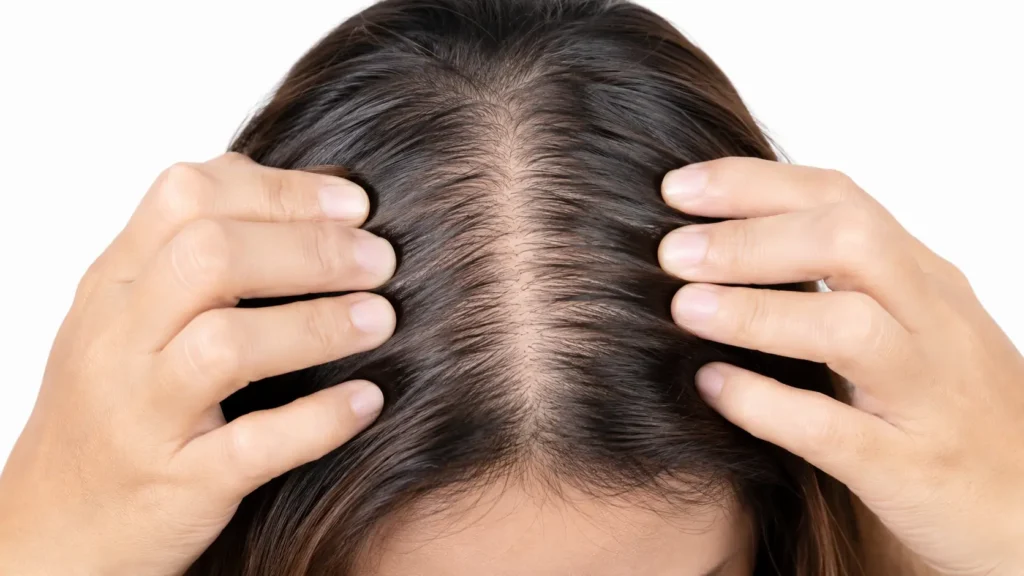
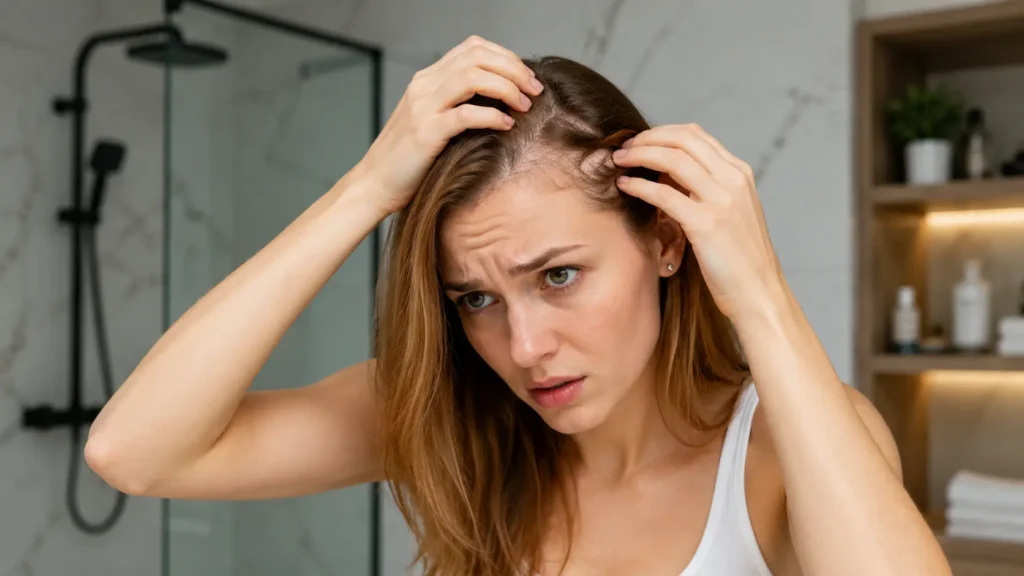
The most common pattern is diffuse shedding. That means hair falls from all over the scalp rather than from one small patch. You may notice a wider part, less ponytail volume, or more visible scalp under bright light. This pattern fits telogen effluvium, which is typically temporary.
A different pattern can point to another cause:
- Patchy bald spots: possible alopecia areata or fungal/scalp disease
- Widening part with gradual thinning: possible female pattern hair loss
- Hairline breakage: possible traction from tight styles
- Scalp itching, redness, pain, or flakes: possible dermatitis, infection, psoriasis, or inflammatory scalp disease
- Sudden heavy shedding after illness, birth, surgery, emotional stress, or major diet change: possible telogen effluvium
Pregnancy hair loss first trimester may be linked with the rapid hormonal adjustment of early pregnancy, severe nausea, low intake, stress, thyroid dysfunction, or a deficiency. Hair loss in early pregnancy is not the classic “expected” pattern, so it deserves a more careful review if it is obvious or worsening.
Can pregnancy cause alopecia or hair loss?
Yes, pregnancy can be part of the cause, but it is not always the only cause. Hormonal changes due to pregnancy and childbirth are recognized causes of temporary hair loss, and thyroid problems can also contribute to shedding. Hormonal changes from pregnancy and childbirth, thyroid problems, stress, poor nutrition, medications, and tight hairstyles among possible causes of hair loss.
The key is timing. If shedding begins after birth, the hormone shift is often the main trigger. If shedding begins during pregnancy, especially in the first trimester, your clinician may look for other contributors such as iron deficiency, thyroid imbalance, recent fever, high stress, restrictive diet, medication changes, or low protein intake.
A pregnancy hair loss cause can also be indirect. For example, nausea can reduce protein and micronutrient intake. Fatigue can increase stress. A complicated pregnancy can act as a physical and emotional trigger. The hair follicle responds to the whole body, not just to estrogen.
what causes hair loss during pregnancy?
Pregnancy can affect hair through several pathways.
Hormonal shifts
Estrogen can prolong the hair growth phase during pregnancy. After delivery, estrogen drops, and many hairs move into the shedding phase at once. This explains why Pregnancy hair loss after birth can feel sudden and dramatic, even though the process began earlier in the hair cycle.
Thyroid changes
The thyroid gland helps regulate metabolism, energy, temperature, mood, and hair cycling. Pregnancy and the postpartum period can uncover thyroid problems. Hypothyroidism may cause fatigue, dry skin, weight gain, constipation, low mood, and hair shedding. Hyperthyroidism may cause palpitations, anxiety, heat intolerance, tremor, weight loss, and shedding. Because these symptoms can overlap with pregnancy and postpartum life, testing is often important.
Nutritional depletion
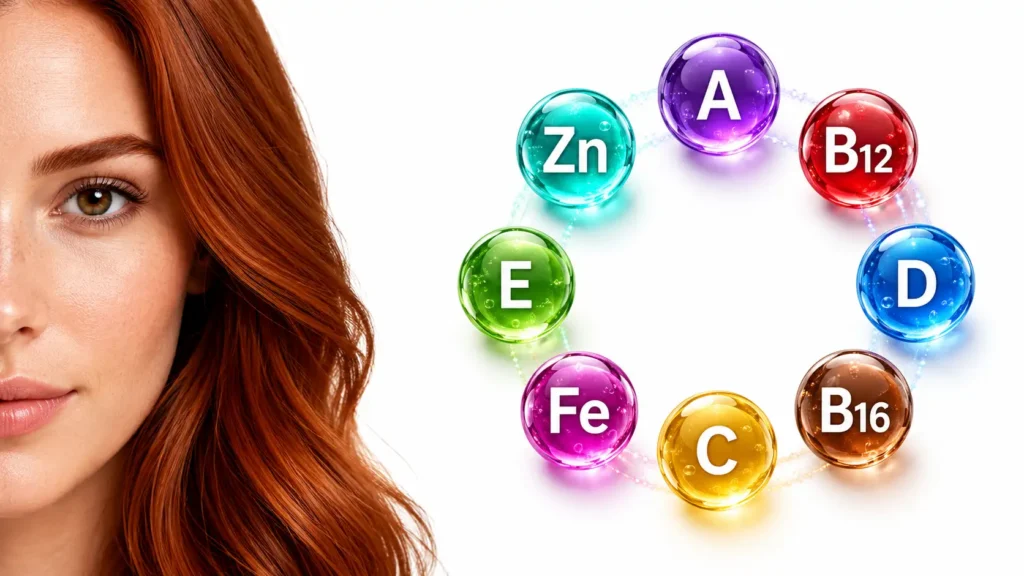
Hair follicles need enough protein, iron, zinc, vitamin D, B vitamins, and overall calories. Deficiencies do not always cause shedding by themselves, but they can worsen it and slow regrowth. This is especially relevant after vomiting, poor appetite, bariatric surgery, vegetarian or vegan diets without planning, blood loss during delivery, or breastfeeding.
Stress and physical shock
Childbirth, sleep disruption, illness, surgery, emotional distress, and rapid weight change can trigger telogen effluvium. In this setting, the hair may begin shedding two to three months after the trigger. Telogen effluvium is described as temporary shedding that often follows a stressor or major body change.
The Hair Growth Cycle
Understanding the hair cycle makes pregnancy hair loss less mysterious.
- Anagen: the growth phase
This is the active phase. Anagen lasts for several years, with most scalp hairs in this phase at any given time. During pregnancy, higher estrogen may keep more hair in anagen, which is why some women enjoy thicker hair. - Catagen: the transition phase
This is a short phase where the follicle slows down and prepares to rest. - Telogen: the resting and shedding phase
Telogen is the resting phase. After this phase, the follicle releases the hair and begins a new cycle. Postpartum shedding happens when more hairs than usual enter telogen around the same time.
This is why pregnancy hair loss treatment should start with diagnosis. If the issue is temporary telogen effluvium, reassurance and supportive care may be enough. If the issue is thyroid disease, anemia, or another endocrine problem, treating the underlying condition matters more than changing shampoo.
Other Common Hair Changes During Pregnancy
Hair changes during pregnancy vary widely. Some women get fuller, shinier hair. Others notice oily roots, dry ends, curls becoming looser or tighter, faster growth, scalp sensitivity, or breakage. Hair and nail texture or growth can change during pregnancy and usually return to the pre-pregnancy state after delivery.
Common changes include:
- Thicker-feeling hair during the second and third trimester
- Greasier scalp due to hormonal changes
- Drier, more fragile ends
- Texture changes, including curl pattern shifts
- More facial or body hair growth
- Postpartum shedding several months after delivery
If your hair feels thinner but you are not seeing roots falling out, the issue may be breakage rather than shedding. This distinction matters because breakage often responds to gentler styling, reduced heat, and less tension.
Pregnancy Hair Loss After Birth
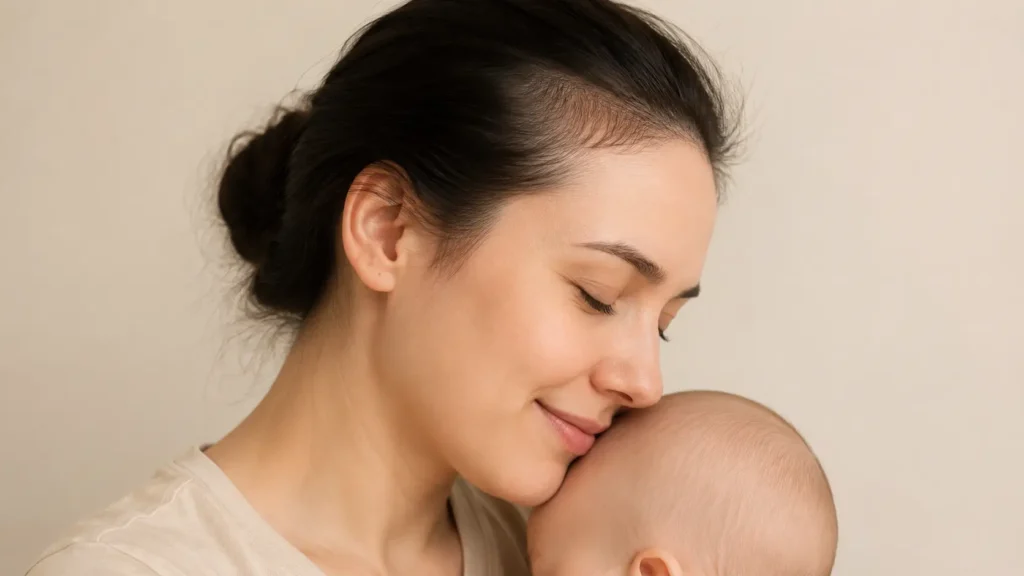
You might be wondering what causes hair loss during pregnancy, but you may not have noticed that hair loss increases significantly in the postpartum period, not during pregnancy. This is actually the most common period for hair loss.
Pregnancy hair loss after birth is usually postpartum telogen effluvium. It often begins around two to four months after delivery and may peak around the fourth month. Many women regain normal fullness by the baby’s first birthday. Postpartum shedding is temporary for most people.
This type of shedding can look alarming. You may see large amounts of hair after washing or brushing. You may also notice thinning near the temples. In most cases, the follicle is not destroyed. The hair is cycling back to normal.
Still, postpartum shedding can overlap with other problems. If you feel exhausted beyond expected postpartum fatigue, have heavy periods, palpitations, depression, cold intolerance, constipation, or major weight changes, ask for medical review. In endocrine care, the goal is not only to reassure you; it is to rule out treatable causes.
How Long Will Pregnancy Hair Loss Continue?
Most postpartum shedding improves within several months. Many women see visible regrowth between six and twelve months after birth. Hair often returns to its normal cycle after about 6–12 months, Most women regain normal fullness by the child’s first birthday.
During pregnancy itself, the timeline depends on the trigger. If pregnancy hair loss is related to severe nausea and low intake, improvement may follow nutritional recovery. If it is linked with thyroid dysfunction or anemia, it may continue until the underlying problem is treated. If it is triggered by stress, illness, or surgery, shedding may start months later and gradually resolve once the body stabilizes.
Pregnancy hair loss becomes more concerning when it lasts longer than six months, continues beyond one year postpartum, or changes from shedding to progressive thinning.
Pregnancy Hair Loss Prevention
Pregnancy hair loss prevention is not always fully possible, especially when postpartum hormone changes are the trigger. However, you can reduce avoidable breakage, support regrowth, and lower the chance that deficiencies worsen the shedding Especially if you know what causes hair loss during pregnancy specifically in your condition.
Practical prevention steps include:
- Avoid tight ponytails, slick buns, heavy extensions, and tight braids.
- Use a wide-tooth comb, especially on wet hair.
- Keep heat styling low and infrequent.
- Avoid harsh bleaching or chemical treatments if your hair is fragile.
- Use a gentle shampoo and a lightweight conditioner.
- Focus conditioner on the mid-lengths and ends, not the scalp.
- Do not crash diet after delivery.
- Continue pregnancy or postpartum supplements only as advised.
- Ask your doctor about thyroid, ferritin, vitamin D, B12, and other tests if shedding is heavy.
Think of prevention as “protect the follicle and protect the strand.” The follicle needs internal support; the strand needs gentle handling.

Effect of Diet in Preventing Pregnancy Hair Loss
Diet will not stop normal postpartum shedding overnight, but it can support healthier regrowth. Hair is made largely of protein, and follicles are metabolically active. When the body is undernourished, hair growth becomes a lower priority.
A hair-supportive pregnancy and postpartum diet should include:
- Protein: eggs, fish low in mercury, chicken, lean meat, lentils, beans, Greek yogurt, tofu, or paneer
- Iron-rich foods: lean meat, legumes, spinach, fortified grains, dates, and iron-fortified cereals
- Vitamin C: citrus, berries, peppers, kiwi, and tomatoes to support iron absorption
- Omega-3 sources: low-mercury fish, walnuts, chia, flax, or doctor-approved DHA
- Zinc sources: meat, seafood, pumpkin seeds, chickpeas, nuts, and dairy
- Vitamin D sources: fortified foods, fatty fish, eggs, and medically guided supplementation when low
- Hydration: particularly important in Dubai’s hot climate
If you are vegetarian, vegan, breastfeeding, recovering from heavy bleeding, or struggling with nausea, personalized nutrition advice is valuable. Vegetarian or vegan pregnancy diets need special attention to iron, zinc, B12, iodine, vitamin D, choline, protein, and omega-3 intake.
Pregnancy Hair Loss Supplement
A pregnancy hair loss supplement should be chosen carefully. More is not always better, and “hair vitamins” are not automatically safe or useful during pregnancy or breastfeeding.
A standard prenatal vitamin may already include iron, folate, iodine, vitamin D, and B vitamins. Some women may need additional iron, vitamin D, B12, or iodine, but only after medical review or lab testing. High-dose vitamin A can be unsafe in pregnancy, and high-dose biotin can interfere with laboratory tests, including thyroid hormone tests.
Biotin is often marketed for hair, but there is little scientific evidence supporting biotin supplements for hair, skin, and nails unless there is a deficiency, and biotin above the recommended amounts may cause false lab results. This matters for endocrine patients because inaccurate thyroid results can lead to confusion.
Before taking any supplement for pregnancy hair loss, ask:
- Am I pregnant, breastfeeding, or trying to conceive?
- Have my ferritin, thyroid function, vitamin D, and B12 been checked?
- Does this product contain high-dose biotin?
- Does it duplicate my prenatal vitamin?
Is the dose appropriate for pregnancy? - Could it interfere with my medication or lab tests?

Tips for Your Hair Health During and After Pregnancy
Small routines can make a visible difference while the body resets.
Try these habits:
- Wash as needed; a clean scalp supports comfort and reduces buildup.
- Use a volumizing shampoo if hair feels flat.
- Choose light conditioner for fine or shedding hair.
- Detangle from the ends upward.
- Pat hair dry with a soft towel instead of rubbing.
- Switch to loose hairstyles.
- Use silk or satin pillowcases if friction causes breakage.
- Avoid heavy oils on the scalp if they cause itching or buildup.
- Keep scalp massage gentle; do not scratch.
- Take photos monthly instead of checking the mirror daily.
If you are asking “pregnancy hair loss what to do,” start with three steps: protect your hair from tension, nourish your body consistently, and book medical assessment if shedding is heavy, early, persistent, or paired with systemic symptoms.
Pregnancy Hair Loss Treatment
Pregnancy hair loss treatment depends on the cause.
- If it is normal postpartum shedding
Treatment is usually supportive. Your clinician may recommend reassurance, gentle hair care, nutrition support, and time. Volumizing products and a shorter haircut can help the hair look fuller while regrowth catches up. - If it is thyroid-related
Treatment must be individualized. Hypothyroidism and hyperthyroidism require different approaches, especially during pregnancy and breastfeeding. Do not start thyroid medication or change your dose without medical guidance. - If it is iron deficiency or anemia
Your doctor may recommend iron-rich food, oral iron, or further evaluation depending on your blood results. Taking iron without testing can cause side effects and may not solve the problem if iron is not the cause. - If it is female pattern hair loss
Pregnancy or postpartum shedding can reveal an underlying genetic pattern. Treatment options differ during pregnancy, breastfeeding, and after breastfeeding, so specialist guidance is important. - If it is scalp disease
Flaking, redness, pain, pustules, scaling, or patches need examination. Treating inflammation or infection early can protect hair follicles.
The safest treatment plan begins with diagnosis, not guesswork.
When to Seek Medical Care
From the moment you notice hair loss and start asking “Can pregnancy cause alopecia?!”, you should decide whether the rate of hair loss is normal or if you need to see a doctor.
Seek medical care if:
- Hair is falling in clumps
- You see bald patches
- Shedding starts suddenly in the first trimester
- You have scalp pain, burning, redness, scaling, or pus
- Hair loss continues more than six months
- Hair has not improved by one year postpartum
- You feel unusually tired, cold, anxious, depressed, or weak
- You have palpitations, tremor, major weight change, constipation, or heavy bleeding
- You have a known thyroid condition, PCOS, diabetes, anemia, autoimmune disease, or recent bariatric surgery
- You are taking medications or supplements that may affect hair
In Dubai, it is common for women to try salon treatments first. That may help breakage, but it will not diagnose thyroid imbalance, anemia, or endocrine causes. If the shedding feels internal, it probably needs internal evaluation.
Diagnosis: What to Expect During a Scalp Examination
A consultation for pregnancy hair loss usually starts with your timeline. The doctor may ask when shedding began, whether you are pregnant or postpartum, whether you are breastfeeding, how your periods changed, what supplements you take, and whether you had severe nausea, blood loss, infection, fever, surgery, or major stress.
A scalp examination may include:
- Checking whether the loss is diffuse, patchy, patterned, or traction-related
- Looking for redness, scaling, dandruff, scars, pustules, or inflammation
- Gently performing a hair pull test
- Examining the hair shaft for breakage
- Reviewing thyroid, iron, vitamin D, B12, glucose, androgen, or inflammatory markers when appropriate
- Reviewing medications and supplement use, especially high-dose biotin
book Your Consultation With Dr Ali Aldibbiat
If you are in Dubai and worried that your hair shedding is linked with hormones, thyroid imbalance, diabetes, PCOS, postpartum changes, or nutrient deficiency, an endocrine-focused consultation can save you months of uncertainty.
Book a consultation with Dr Ali Aldibbiat for a personalized assessment, lab review, and safe treatment plan tailored to pregnancy, breastfeeding, or postpartum recovery. You can also visit Dr Ali Aldibbiat’s website to learn more and choose the next step that fits your symptoms.
FAQs about pregnancy hair loss
Can pregnancy cause alopecia?
Pregnancy doesn’t cause true alopecia, but it often triggers postpartum telogen effluvium, a temporary and normal period of increased hair shedding caused by fluctuating hormone levels.
Does pregnancy hair loss grow back?
Yes, in most cases it grows back. Postpartum telogen effluvium is usually temporary, and many women regain normal fullness by around the baby’s first birthday. If shedding persists beyond one year, becomes patchy, or is linked with symptoms such as fatigue, palpitations, or weight changes, medical assessment is recommended.
Is hair loss a common symptom of early pregnancy?
Hair loss in early pregnancy can happen, but it is not usually considered a classic early pregnancy symptom. Missed period, nausea, breast tenderness, and fatigue are more typical. If shedding begins in the first trimester, it may be related to stress, hormonal adjustment, thyroid imbalance, low iron, poor intake, or another medical trigger.
What vitamins help with pregnancy hair loss?
The most relevant nutrients are usually iron, vitamin D, B12, zinc, iodine, folate, omega-3 fatty acids, and protein. However, the right supplement depends on your pregnancy stage, diet, blood results, and breastfeeding status. Do not take high-dose supplements without advice, especially high-dose biotin or vitamin A.
Should I see a doctor for pregnancy hair loss?
Yes, if the shedding is severe, starts early, continues for months, causes bald patches, or comes with symptoms such as fatigue, mood changes, palpitations, constipation, tremor, cold intolerance, or unexplained weight change. A doctor can check for thyroid disease, anemia, deficiencies, scalp disease, and endocrine causes.
How to protect hair during pregnancy?
Use loose hairstyles, reduce heat, avoid harsh chemical treatments, detangle gently, eat enough protein, continue doctor-approved prenatal nutrition, and avoid crash dieting. Treat your hair as fragile during pregnancy and postpartum because even temporary shedding can look worse when breakage is added.
When does pregnancy glow start?
Many women notice skin and hair changes during the second trimester, when early nausea may ease and pregnancy hormones are rising. However, not everyone experiences a “glow.” Some women experience acne, pigmentation, dryness, oiliness, or shedding instead. All of these changes can be normal, but severe symptoms should be checked.
Conclusion
Now we have answered the questions “can pregnancy cause alopecia?”, “what causes hair loss during pregnancy?” and learned that pregnancy hair loss is emotionally stressful, and it is often temporary and treatable once the pattern is understood. Postpartum shedding usually reflects the hair cycle returning to normal after hormonal change. Shedding during pregnancy, especially early or severe shedding, deserves a closer look because thyroid imbalance, iron deficiency, vitamin D deficiency, stress, medications, or scalp conditions may be involved.
The best next step is not panic, and it is not buying every hair product on the shelf. The best next step is a structured evaluation. If you are in Dubai and want endocrine-led support, Dr Ali Aldibbiat can help identify the underlying cause and guide a safe plan for pregnancy, breastfeeding, or postpartum recovery. Handled correctly, pregnancy hair loss can become a manageable medical issue, not a long-term source of fear.