

Hashimoto's Thyroiditis Treatment in Dubai: Autoimmune Thyroid Care by Dr. Ali Aldibbiat

20+ Years Clinical Experience | FRCP (London) | FRCP (Edinburgh) | PhD Researcher | FACE | Associate Professor | Jumeirah, Dubai

Specialist hashimotos thyroiditis treatment dubai is available for the most common autoimmune condition and the leading cause of hypothyroidism worldwide but it is routinely managed as a simple hormone deficiency rather than the immune-mediated disease it actually is. In Dubai, where Hashimoto’s thyroiditis treatment demand has grown as autoimmune conditions are increasingly prevalent and often go unrecognized for years, specialist Hashimoto’s thyroiditis treatment addresses both the thyroid hormone deficiency and the autoimmune process driving it. Dr. Ali Aldibbiat provides expert Hashimoto’s thyroiditis treatment in Dubai at his Jumeirah clinic with a comprehensive thyroid and autoimmune panel at the first consultation.

Understanding the condition

What Is Hashimoto's Thyroiditis?

Hashimoto's thyroiditis is an autoimmune condition in which the immune system produces antibodies, most commonly thyroid peroxidase (TPO) and thyroglobulin antibodies, that attack the thyroid gland. Over time, this immune-mediated damage reduces thyroid hormone production and leads to hypothyroidism. It is the most common autoimmune disease globally and the leading cause of hypothyroidism in Dubai and the UAE.

The condition is named after Dr. Hakaru Hashimoto, who first described it in 1912. Hashimoto's often has a long silent phase in which antibodies are present and thyroid tissue is gradually damaged before TSH rises or symptoms appear. This explains why many patients receive a hypothyroidism diagnosis without realizing that an autoimmune process has been active for years.

Effective Hashimoto's thyroiditis treatment in Dubai requires more than thyroid hormone replacement alone. Antibody activity, inflammatory drivers, associated autoimmune conditions, selenium status and iodine exposure all influence long-term care. Dr. Ali Aldibbiat's approach addresses both thyroid hormone needs and the autoimmune condition behind them.

Medical comparison of a healthy thyroid gland and a thyroid affected by Hashimoto's thyroiditis
Why autoimmunity begins

What Causes Hashimoto's Thyroiditis?

Hashimoto's is a multifactorial autoimmune condition. It develops through an interaction between genetic susceptibility, hormonal influences, environmental triggers and immune dysregulation rather than one single cause.

Inherited risk

Genetic Predisposition

Hashimoto's runs in families. First-degree relatives carry a higher risk, and variants including HLA-DR3 and HLA-DR5 increase susceptibility. Genes create the tendency, but a trigger usually activates it.

Family history matters
Hormonal influence

Female Sex and Hormonal Factors

Hashimoto's is 7 to 10 times more common in women. Oestrogen can promote immune activity, while the immune shift after childbirth helps explain why postpartum thyroiditis may progress to permanent Hashimoto's.

Postpartum risk included
External triggers

Environmental and Lifestyle Triggers

Excess iodine, selenium deficiency, chronic stress, smoking, infections and selected medicines may activate or accelerate thyroid autoimmunity in someone who is already genetically susceptible.

Triggers are assessed
Connected conditions

Other Autoimmune Conditions

Type 1 diabetes, coeliac disease, rheumatoid arthritis, Addison's disease, pernicious anaemia and vitiligo occur more often with Hashimoto's, so specialist care includes screening for associated conditions.

Whole-patient screening
Recognising each phase

Symptoms of Hashimoto's Thyroiditis: The Full Picture

Hashimoto's symptoms can move through three phases: silent antibody-positive disease, a temporary hashitoxic phase and established hypothyroidism. Most patients in Dubai present during the hypothyroid phase, although routine antibody testing increasingly identifies the condition earlier.

Woman experiencing fatigue and cold intolerance associated with hypothyroidism
Most common phase

Hypothyroid Symptoms

Fatigue, weight gain, cold intolerance, constipation, dry skin, hair thinning, brain fog, low mood and irregular or heavy periods can appear as thyroid tissue is progressively damaged.

Woman experiencing anxiety and palpitations during a temporary hashitoxic flare
Temporary hormone release

Hashitoxic Phase

An immune flare can release stored thyroid hormone, causing palpitations, anxiety, heat intolerance, sweating and weight loss for weeks or months before hypothyroidism develops.

Clinician examining a woman's neck for thyroid enlargement and goitre
Thyroid enlargement

Goitre

Immune infiltration may cause a soft, non-tender and diffuse thyroid enlargement. Difficulty swallowing or voice change is uncommon, but requires ultrasound assessment.

Woman touching her neck because of pressure and discomfort associated with thyroid inflammation
Local thyroid symptoms

Neck Discomfort

Mild pressure, fullness or discomfort in the throat can reflect thyroid enlargement or inflammation. It differs from the painful neck seen in subacute thyroiditis and is assessed by ultrasound.

Knowing when to act

When Should You See a Doctor for Hashimoto's Thyroiditis?

Hashimoto's thyroiditis requires specialist assessment in several situations. Some are time-sensitive, while others need an early monitoring plan before thyroid function declines.

Specialist assessment guide Arrange an endocrinology review if any of these apply

Positive Thyroid Antibodies

Positive TPO antibodies need monitoring and planning even when symptoms are absent and thyroid function remains normal.

Symptoms Despite a Normal TSH

Persistent fatigue, brain fog or other hypothyroid symptoms may justify a fuller assessment, including free T3 where clinically appropriate.

Pregnancy or Pregnancy Planning

Known Hashimoto's requires tighter TSH targets before conception and during pregnancy, with closer testing and timely dose adjustment.

A Possible Hashitoxic Flare

Sudden palpitations, anxiety, heat intolerance or weight loss may reflect a temporary hyperthyroid phase and need specialist interpretation.

Autoimmune or Neck Changes

Another autoimmune condition, progressive goitre, difficulty swallowing or voice change requires prompt review, ultrasound and possible biopsy.

Early monitoring still matters

Positive antibodies without symptoms or TSH elevation

A specialist consultation can establish a monitoring schedule, assess associated autoimmune conditions, discuss selenium where appropriate and set thyroid targets for any planned pregnancy. Early Hashimoto's thyroiditis treatment in Dubai helps protect thyroid function before significant gland damage develops.

Book Specialist Assessment
Why early management matters

Complications of Untreated Hashimoto's Thyroiditis

Leaving Hashimoto's unmanaged, or monitoring only the TSH number without addressing the autoimmune process, can allow important long-term risks to develop quietly.

01

Progressive Hypothyroidism and Heart Risk

Ongoing thyroid damage can cause overt hypothyroidism, raised LDL cholesterol and greater cardiovascular risk.

Thyroid and cardiovascular monitoring
02

Fertility and Pregnancy Complications

Untreated disease can affect implantation and increase miscarriage, premature birth and pregnancy-related risks.

Specialist pregnancy targets
03

Associated Autoimmune Conditions

Type 1 diabetes, coeliac disease, Addison's disease, pernicious anaemia and rheumatoid arthritis occur more often.

Early screening reduces harm
04

Thyroid Lymphoma

This complication is rare, but a rapidly enlarging goitre, pain or pressure symptoms require prompt investigation.

Rare but clinically important
A complete autoimmune assessment

How Hashimoto's Thyroiditis Is Diagnosed in Dubai

Diagnosis combines thyroid function tests, antibody testing, and ultrasound. TSH alone cannot confirm Hashimoto's. Dr. Ali establishes the full autoimmune picture before treatment begins.

Step 01
Blood samples prepared for TSH and free T4 thyroid function testing Thyroid function
Functional status

TSH and Free T4

Elevated TSH with low free T4 confirms overt hypothyroidism; elevated TSH with normal free T4 indicates subclinical disease. Normal function with positive antibodies identifies the silent phase. Each needs a different management plan.

Step 02
Laboratory scientist preparing a sample for thyroid antibody testing Primary antibody test
Autoimmune confirmation

TPO Antibodies

TPO antibodies are positive in more than 90 percent of Hashimoto's cases and support the autoimmune diagnosis. The number alone does not define severity; its trend and the thyroid's functional status matter more clinically.

Step 03
Blood sample tubes used for thyroglobulin antibody testing Secondary antibody test
Closing diagnostic gaps

Thyroglobulin Antibodies

Thyroglobulin antibodies are present in about 80 percent of cases and can identify patients whose TPO test is negative. They are also recorded because they can interfere with thyroglobulin tumour-marker testing.

Step 04
Ultrasound examination used to assess thyroid structure and nodules Structural assessment
Imaging the gland

Thyroid Ultrasound

Ultrasound looks for the characteristic heterogeneous, hypoechoic gland and altered vascularity. It also measures thyroid size, confirms goitre, and identifies nodules that need further evaluation.
Step 05
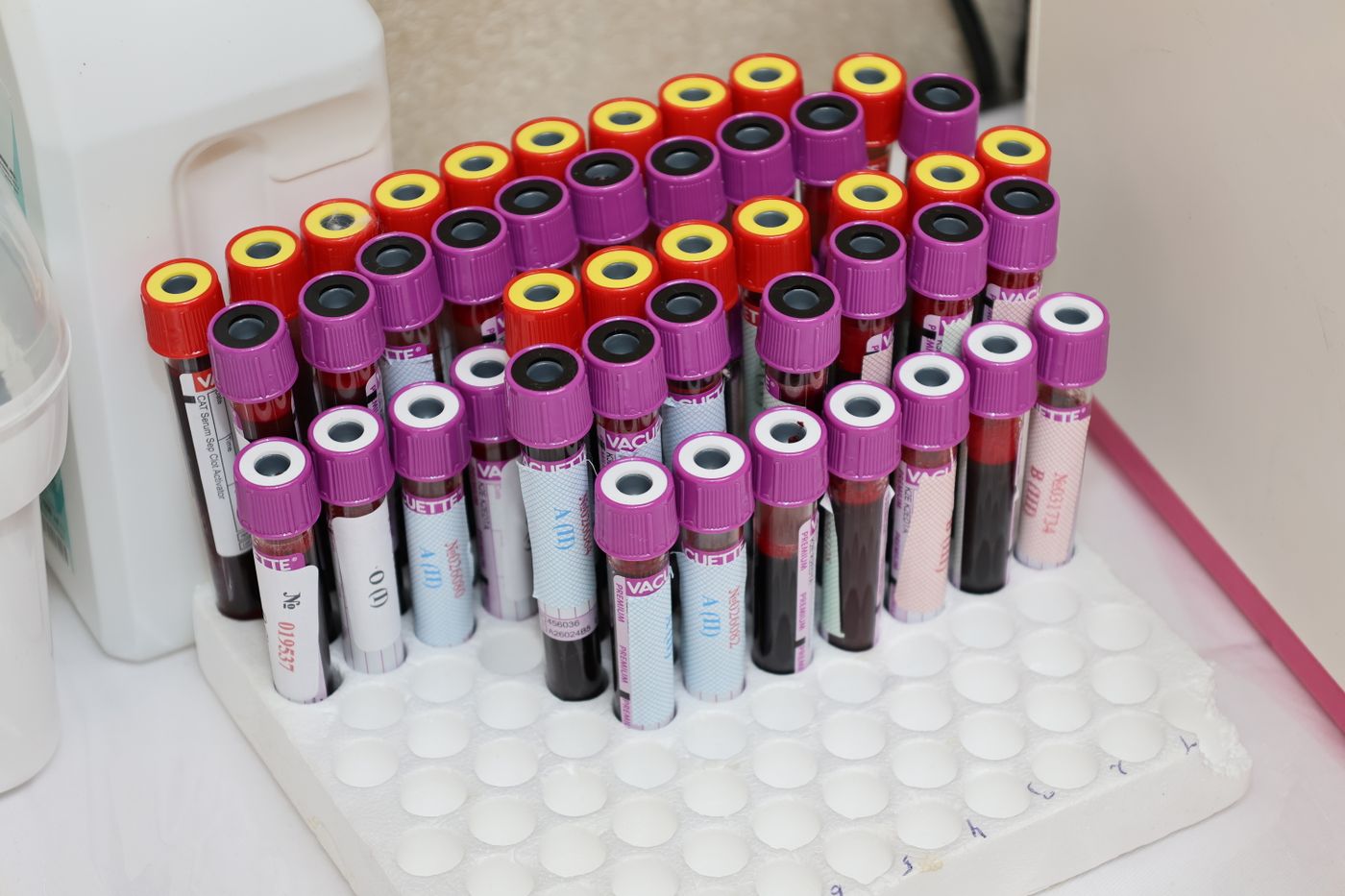
Laboratory blood samples prepared for an associated autoimmune condition screen Connected conditions
Wider autoimmune screen

Associated Autoimmune Screen

Confirmed Hashimoto's may prompt celiac antibodies, glucose and HbA1c, vitamin B12 and haematinics, plus morning cortisol when symptoms suggest adrenal insufficiency. This reveals conditions that need parallel care.

Cause-led thyroid care

Hashimoto's Thyroiditis Treatment in Dubai: Beyond Levothyroxine

Specialist care has two goals: replace missing thyroid hormone and manage the autoimmune process driving further gland damage.

Featured answer Two connected treatment goals

Hashimoto's thyroiditis treatment in Dubai combines hormone replacement when thyroid output is low with clinician-led autoimmune, nutritional, and metabolic support. Treatment is matched to symptoms, blood results, pregnancy plans, and associated autoimmune risk.

Core medical treatment

Levothyroxine Therapy

Levothyroxine replaces hormone the thyroid can no longer make. The dose is adjusted to symptoms, free T4, TSH, age, and pregnancy status. Persistent symptoms after an apparently normal TSH prompt reassessment before carefully selected T4/T3 combination therapy is considered.

Explore hypothyroidism treatment
Starting point Confirmed deficiency
Dose Individualised
Review Symptoms + bloods
02

Selenium Support

Selenium may support thyroid antioxidant activity and reduce antibodies in selected patients. Dose and duration are clinician-led to avoid excess intake.

03

Gluten and Coeliac Assessment

Anti-tTG IgA testing checks for coeliac disease. A gluten-free diet is essential when confirmed; any wider dietary trial is personalised rather than automatic.

04

Iodine Management

Normal food-based iodine is appropriate, but high-dose supplements may intensify autoimmune activity. Iodine contrast exposure should be recorded and monitored.

05

Autoimmune Monitoring

Follow-up may screen for coeliac disease, type 1 diabetes, pernicious anaemia, adrenal insufficiency, and vitiligo when history or symptoms indicate.

Supplements, liothyronine, and restrictive diets should only be introduced after individual clinical assessment.

Specialist autoimmune thyroid care

Why Choose Dr. Ali Aldibbiat for Hashimoto's Thyroiditis Treatment in Dubai?

Dr. Ali combines more than 20 years of endocrine experience with dual FRCP fellowships and PhD-level research to treat both thyroid hormone deficiency and its autoimmune context.

Fact-Checked By Dr. Ali Aldibbiat

MD | PhD | FRCP (London) | FRCP (Edinburgh) | FACE | Associate Professor

Hashimoto's is often managed as simple hypothyroidism. Dr. Ali's approach adds antibody review, ultrasound surveillance, nutritional assessment and screening for connected autoimmune conditions when clinically appropriate.

Autoimmune Care, Not TSH Alone

Hormone replacement is integrated with antibody, nutrition and associated-condition monitoring.

Persistent Symptoms Reassessed

Free T3, medication use and other causes are reviewed before selected T4/T3 therapy is considered.

Pregnancy Planning From the Start

Pre-conception TSH optimisation, tighter pregnancy monitoring and timely levothyroxine adjustment support safer maternal and fetal outcomes.

Confirmed patient feedback

What Our Patients Say

Verified Google reviews describing the wider care experience with Dr. Ali Aldibbiat in Dubai.

★★★★★
“I would like to thank Dr. Ali Aldibbiat. He is an exceptional doctor, highly experienced in his specialty, and fully dedicated to his patients' healing.”
FatenGoogle review
G
★★★★★
“The hospital has very great services and experienced doctors. Thanks to Dr. Ali Aldibbiat, he knew my issues from the first time. Although I have been to many places, no one could find what I was going through.”
Ahmed AlblooshiDubai, Google review
G
★★★★★
“I visit Dr. Ali AlDibbiat, the endocrinologist here, who is excellent and very patient. His treatment has significantly improved my diabetes control.”
Noel MirandaGoogle review
G
More patient experiencesRead All Patient Reviews
Clinic location and access

Hashimoto's Thyroiditis Specialist Near Me: Dubai and UAE

Specialist Hashimoto's thyroiditis treatment in Dubai from Dr. Ali Aldibbiat's Jumeirah clinic, welcoming patients from across the UAE.

Serving Dubai and beyond

Autoimmune thyroid care in Jumeirah

The Century Plaza clinic serves Jumeirah, Downtown Dubai, DIFC, Dubai Marina, Deira, Bur Dubai, JBR, Al Quoz and Mirdif. Patients also travel from Abu Dhabi and Sharjah for specialist assessment.

JumeirahDowntown DubaiDIFCDubai MarinaDeiraBur DubaiJBRAl QuozMirdifAbu DhabiSharjah

Searching for a Hashimoto's specialist, autoimmune thyroid specialist or thyroid doctor near me? The Jumeirah 1 clinic is easy to reach by car.

Book an Appointment
Jumeirah 1, Dubai109 Century PlazaJumeirah Beach Road
SpecialistDr. Ali Aldibbiat
Clinic109 Century Plaza, Jumeirah 1
Call+971 58 588 2295 Emaila.aldibbiat@draliendo.com

Frequently Asked Questions
Hashimoto's Thyroiditis Treatment in Dubai

Hashimoto’s thyroiditis is an autoimmune condition in which the immune system produces antibodies, primarily thyroid peroxidase (TPO) antibodies, that attack and progressively destroy thyroid tissue. Over time this immune-mediated destruction causes hypothyroidism (underactive thyroid). It is the most common autoimmune disease globally and the leading cause of hypothyroidism in Dubai and the UAE. Hashimoto’s thyroiditis treatment in Dubai addresses both the autoimmune process and the resulting hormone deficiency.

Hashimoto’s thyroiditis treatment in Dubai cannot cure the autoimmune process. Hashimoto’s thyroiditis cannot be cured in the sense of permanently stopping the autoimmune process: it is a lifelong autoimmune condition. However, Hashimoto’s thyroiditis treatment in Dubai can very effectively manage it. Levothyroxine replaces the hormones the gland can no longer make. Selenium supplementation reduces antibody levels and inflammation. Monitoring prevents the long-term complications. The majority of patients with well-managed Hashimoto’s thyroiditis treatment in Dubai feel completely well and lead a fully normal life.

Hashimoto’s thyroiditis treatment in Dubai requires understanding the phase of the disease. In the hypothyroid phase, the most common presentation in Dubai. Symptoms include persistent fatigue, unexplained weight gain, cold intolerance, constipation, dry skin and hair, brain fog, depression, and, in women, irregular or heavy periods. During a Hashimoto’s flare, temporary hyperthyroid symptoms occur: palpitations, anxiety, heat intolerance, and weight loss. Some patients in the silent antibody-positive phase have no symptoms at all.

Yes, selenium is the most evidence-based nutritional intervention in Hashimoto’s thyroiditis treatment in Dubai. Multiple randomized controlled trials have demonstrated that 200 mcg of selenium daily reduces TPO antibody levels, decreases thyroid inflammation, and improves quality of life in Hashimoto’s patients. The thyroid gland has the highest selenium concentration of any organ and depends on selenium for both hormone synthesis and protection against the oxidative damage caused by immune attack. Dr. Ali Aldibbiat discusses selenium supplementation as part of every Hashimoto’s thyroiditis treatment Dubai consultation.

Yes. Without Hashimoto’s thyroiditis treatment in Dubai, progressive hypothyroidism develops with elevated cardiovascular risk, impaired fertility, depression, and peripheral neuropathy. In pregnancy, unmanaged Hashimoto’s, even with a normal TSH. It increases miscarriage risk due to the direct effect of thyroid antibodies on implantation. Long-standing autoimmune thyroiditis also carries a small but real increased risk of thyroid lymphoma. Early Hashimoto’s thyroiditis treatment in Dubai prevents these complications.

A consultant endocrinologist is the most appropriate specialist for hashimotos thyroiditis treatment in Dubai, particularly for managing the autoimmune dimension beyond levothyroxine, persistent symptoms on levothyroxine, Hashimoto’s in pregnancy, or co-existing autoimmune conditions. Dr. Ali Aldibbiat provides specialist Hashimoto’s thyroiditis treatment in Dubai at 109 Century Plaza, Jumeirah Beach Road, Jumeirah 1. Book at /contact/book-appointment/ or call +971 58 588 2295.

Vitality Health Calculator Patient Connection Hub