

Diabetic trigger finger treatment Dubai: Clinical Care Guide
Written by Dr. Ali Aldibbiat, Consultant Endocrinologist, as an expert guest contribution for Dubai Hand, led by fellowship-trained hand surgeon Dr. Mohammad...
 Written by
Dr Ali Aldibbiat
Written by Dr. Ali Aldibbiat, Consultant Endocrinologist, as an expert guest contribution for Dubai Hand, led by fellowship-trained hand surgeon Dr. Mohammad Ali.
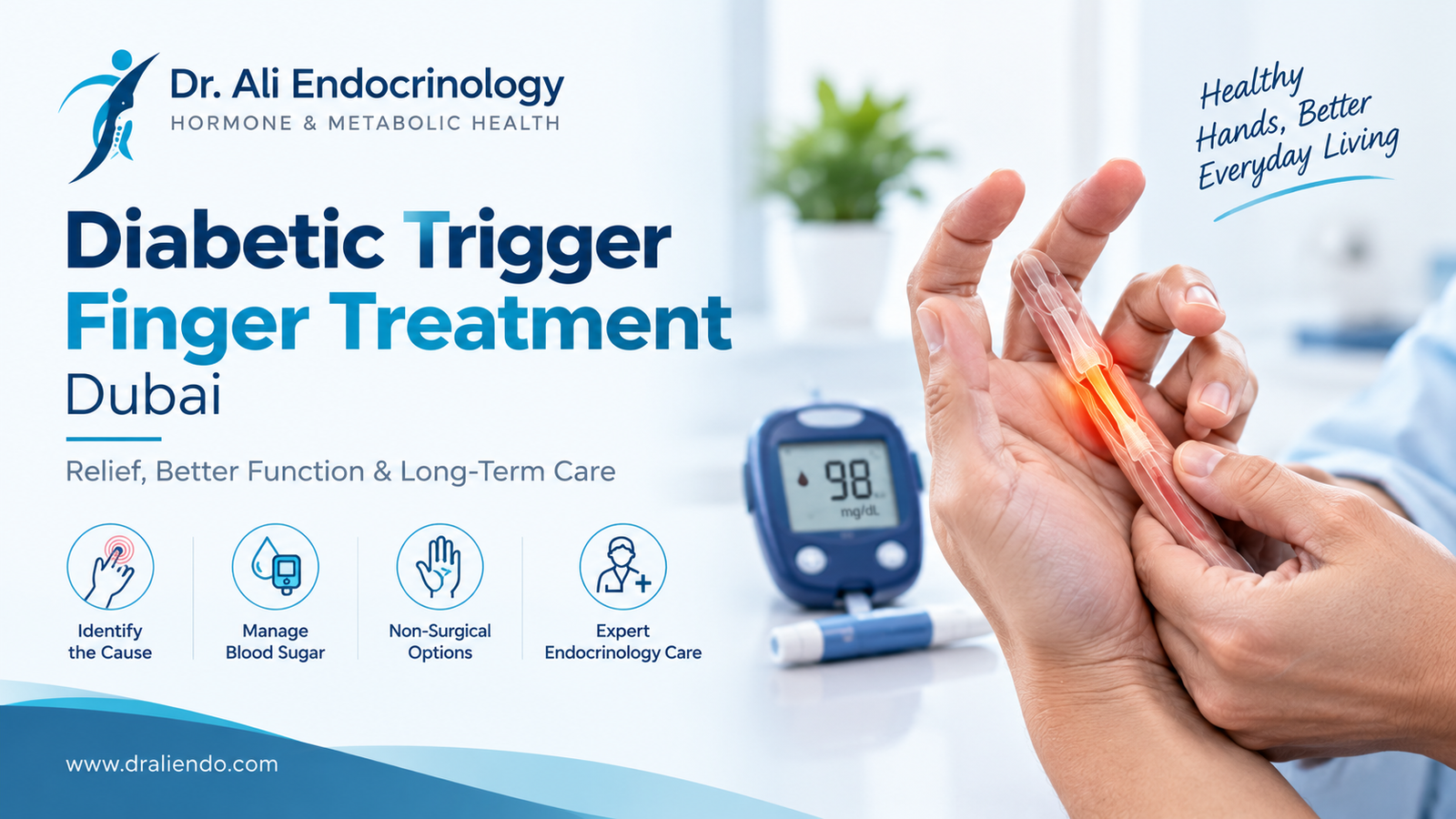
Seeking safe diabetic trigger finger treatment dubai requires understanding how metabolic disease alters hand anatomy. Chronic hyperglycemia, which means persistent high blood glucose, stiffens flexor tendons, causing fingers to click, catch, or lock painfully in the palm. Standard treatments often fail in diabetic patients. This clinical guide explains conservative risks, blood sugar spikes after injections, and advanced outpatient release options available across Dubai.
Key Takeaways
- Up to 20% of diabetic individuals develop stenosing tenosynovitis, frequently suffering from multiple locked digits simultaneously (PubMed, 2025)[1].
- Corticosteroid injections trigger sharp blood sugar spikes (averaging 73% overall and up to 145% in insulin-dependent patients on the first morning) lasting at least five days (PubMed, 2006)[2] and fail nearly twice as often (71.9% vs. 38.1%) when HbA1c exceeds 6.5% (PubMed, 2022)[3].
- Minimally invasive A1 pulley release under WALANT local anesthesia provides a permanent cure without requiring prolonged surgical fasting.
- Integrated management between your endocrinologist and a specialized hand surgeon ensures rapid functional recovery and protects delicate hand microcirculation.
The Diabetes-Tendon Link: Why Trigger Finger Strikes Diabetic Patients
Trigger finger, clinically known as stenosing tenosynovitis (which means inflammation and narrowing of the protective sheath surrounding your finger tendons), occurs when the flexor tendons that curl your fingers into your palm encounter constriction.
When you close your hand, the flexor digitorum profundus and superficialis tendons glide smoothly through a sequence of anatomical pulleys anchored to the finger bones.
The first annular pulley, commonly termed the A1 pulley, sits at the base of your finger near the distal palm crease and absorbs the greatest mechanical friction during gripping.
How High Blood Sugar Thickens the A1 Pulley
In patients with diabetes, prolonged systemic hyperglycemia alters structural tissues through non-enzymatic glycation, where glucose molecules bond directly to proteins without enzymatic mediation.
This biochemical reaction generates advanced glycation end-products (AGEs), which form abnormal intermolecular cross-links within dense type-1 collagen fibers.
These cross-linked collagen bundles make the flexor tendon sheath stiff, inelastic, and thickened, leading to painful friction as described in our review of trigger finger symptoms.
Simultaneously, microvascular ischemia, which means reduced blood flow through the smallest blood vessels, starves the inner synovial lining of normal oxygenation, causing progressive fibrocartilaginous metaplasia within the gliding sheath.
Why Do Diabetics Get Multi-Digit Stenosing Tenosynovitis?
Unlike non-diabetic trigger finger, which typically develops in an isolated digit due to acute repetitive trauma, diabetic tenosynovitis is a systemic musculoskeletal complication.
Because circulating advanced glycation end-products diffuse across all peripheral connective tissues, diabetic patients routinely develop simultaneous locking across multiple digits.
The ring finger, middle finger, and thumb represent the most vulnerable digits, but bilateral multi-digit involvement is five times more common in diabetic cohorts.
Maintaining long-term glycemic control via dedicated diabetes management Dubai protocols can help reduce ongoing systemic collagen cross-linking throughout your upper limbs.
Clinical Presentation: Recognizing Diabetic Trigger Finger Early
Diabetic patients often overlook early tenosynovitis, confusing the initial localized stiffness with generalized diabetic stiff hand syndrome (cheiroarthropathy) or early peripheral neuropathy.
Recognizing the distinct clinical hallmarks ensures prompt referral before your digit becomes fixed in rigid, irreversible flexion contracture.
What Does Early Stage Trigger Finger Feel Like?
The condition progresses through clear symptomatic phases, generally beginning with vague palm tenderness before mechanical trapping starts:
- Morning Stiffness and Resistance: A tight, non-pliable sensation at the base of the fingers upon waking that gradually eases as you move your hand.
- Palpable Tender Nodules: A firm, pea-sized swelling over the distal palmar crease that shifts slightly as your finger bends and straightens.
- Audible Clicking or Snapping: A distinct mechanical pop felt when opening your hand from a clenched fist position.
- Intermittent Finger Catching: The digit hesitates midway through extension, requiring a conscious push to snap straight.
Why Is My Finger Locked in the Morning?
Patients frequently ask why their fingers lock tightly while sleeping, requiring manual assistance from the opposite hand to force the finger open upon waking.
During sleep, physiological finger flexion causes microscopic fluid accumulation within the tendon sheath while your hands remain immobile for hours.
This localized edema expands the swollen nodule, trapping it behind the rigid A1 pulley until manual manipulation forces it back through the constricted opening.
If you are unsure whether your symptoms stem from nerve compression or mechanical tendon entrapment, take our online pain assessment quiz to assess your hand discomfort.
Conservative Management: Why Injections Behave Differently in Diabetes
Standard orthopedic practice frequently relies on conservative therapies, such as customized orthoses, physical therapy, and local corticosteroid injections, for general trigger finger cases.
However, when managing patients with diabetes, conservative interventions yield significantly lower success rates and introduce distinct metabolic considerations.
Do Splinting and Hand Therapy Work for Diabetics?
Rigid nocturnal splinting holds the metacarpophalangeal joint in neutral alignment, preventing the flexor nodule from wedging into the A1 pulley overnight.
While customized orthoses reduce acute mechanical irritation, they rarely reverse dense diabetic collagen glycation once structural thickening occurs.
Learn more about our non-operative rehabilitation protocols in our overview of splinting techniques used in outpatient hand clinics.
The Corticosteroid Failure Rate in Patients with Elevated HbA1c
While corticosteroid injections resolve trigger finger in 70% to 90% of non-diabetic patients (PubMed, 2025)[4], clinical outcomes drop dramatically when metabolic disease is present.
A retrospective cohort study published in Plastic and Reconstructive Surgery evaluating 2013–2019 patient data confirmed that patients with HbA1c levels above 6.5% experience a 71.9% steroid injection failure rate, compared to 38.1% in non-elevated cohorts (PubMed, 2022).[3]
Repeated steroid injections into glycated sheaths also accelerate tendon collagen degeneration, increasing the risk of spontaneous flexor tendon rupture.
Consequently, current clinical practice recommends a strict maximum of one injection before transitioning diabetic patients toward definitive surgical correction.
Managing Post-Injection Hyperglycemia: Practical Protocols
Many patients are surprised to learn that a localized digital injection can destabilize their systemic blood sugar control for several days.
Understanding this pharmacological mechanism allows you and your healthcare team to establish proactive insulin and dietary countermeasures.
Why Does a Cortisone Shot Raise Blood Sugar?
Water-insoluble depot corticosteroids (such as triamcinolone acetonide or methylprednisolone) injected into the digital sheath leach slowly into the systemic circulation.
Once circulating, corticosteroids stimulate hepatic gluconeogenesis, inhibit peripheral glucose uptake in skeletal muscle, and induce transient peripheral insulin resistance.
Research published in the Journal of Hand Surgery demonstrates that digital steroid injections produce an average 73% increase in first-morning blood glucose, reaching an average of 145% in insulin-dependent patients (PubMed, 2006).[2]
The American Academy of Orthopaedic Surgeons notes that post-injection glycemic spikes can persist for 10 to 14 days in diabetic patients (AAOS OrthoInfo, 2023).
Step-by-Step Glycemic Monitoring Protocol
If you and your surgeon choose an injection, following a structured blood glucose monitoring protocol is essential to maintain metabolic safety:
- Baseline Assessment: Record fasting and post-prandial glucose values for three consecutive days prior to digital injection.
- Intensified Testing Schedule: Monitor blood glucose at least four times daily (fasting, pre-lunch, pre-dinner, and bedtime) for 7 to 10 days post-injection.
- Continuous Glucose Monitors (CGM): Set tight real-time glucose alerts on your sensor device to identify rapid post-meal spikes immediately.
- Physician-Directed Dosing: Coordinate with your endocrinologist to temporarily adjust basal or bolus insulin units rather than guessing corrections independently.
Trigger Finger Treatment Comparison for Diabetic Patients
Evaluating treatment pathways requires balancing long-term cure rates against procedural invasiveness and metabolic risks.
The comparison table below outlines the primary interventions available for diabetic stenosing tenosynovitis in modern practice.
| Treatment Modality | Typical Success Rate | Impact on Blood Glucose | Recovery Time | Clinical Indication |
|---|---|---|---|---|
| Custom Splinting | 25% – 35% in diabetics | Neutral (no impact) | 6 to 10 weeks | Mild early morning catching without fixed contracture. |
| Corticosteroid Injection | 28% – 45% (HbA1c > 6.5%) | Severe spike (73% to 145% for 3–14 days) | 3 to 7 days | Single presentation seeking temporary anti-inflammatory relief. |
| Percutaneous Needle Release | 80% – 88% | Neutral (with local anesthesia) | 4 to 7 days | Discrete single-digit snapping with palpable anatomical landmarks. |
| Open Surgical A1 Pulley Release | 98% – 100% (definitive) | Neutral (under local anesthesia) | 10 to 14 days | Chronic locking, multi-digit disease, or failed prior injection. |
When Conservative Treatment Fails: Surgical Options in Dubai
When conservative measures fail to deliver lasting relief, surgical release provides a definitive, permanent resolution for stenosing tenosynovitis.
Surgery physically eliminates mechanical constriction by dividing the thickened A1 pulley, allowing the flexor tendon to glide without friction.
Choosing Diabetic Trigger Finger Treatment Dubai Specialists for Surgical Release
Selecting experienced hand surgeons ensures careful evaluation between open and percutaneous approaches, keeping diabetic soft-tissue health in focus throughout care.
Open A1 Pulley Release: A precise 1- to 1.5-centimeter incision is made along the natural palmar skin crease under direct surgical magnification.
The surgeon visualizes the digital neurovascular bundles directly, divides the constricted pulley completely, and checks tendon glide before closing the skin with fine sutures.
Percutaneous Needle Release: Using high-frequency ultrasound guidance, a specialized needle transects the pulley through a tiny puncture wound without an open incision.
While percutaneous release offers faster skin healing, open surgery remains the clinical gold standard for diabetic patients to verify complete clearance of extensive fibrocartilaginous tissue.
Explore surgical indications and operative workflows in our guide to surgical procedures for hand and upper extremity disorders.
Long-Term Durability in Diabetic Cohorts
Comprehensive 2010–2020 register data published in Hand by the Swedish National Diabetes Register and HAKIR demonstrated that open trigger finger release provides definitive long-term symptom resolution regardless of baseline HbA1c levels (PubMed / HAKIR, 2026).[5]>
Surgical transection permanently decompresses the mechanical bottleneck, meaning true recurrence at the surgically released pulley is exceptionally rare.
The WALANT Advantage: Wide-Awake Surgery for Diabetic Patients
Traditional hand surgery often required general anesthesia or deep regional nerve blocks accompanied by tight arm tourniquets, which means blood flow occluding arm cuffs that can stress vulnerable diabetic vessels.
Modern hand surgery in Dubai utilizes WALANT (Wide-Awake Local Anesthesia No Tourniquet), delivering immense benefits for diabetic individuals seeking safe care.
Eliminating Prolonged Fasting and Hypoglycemic Danger
General anesthesia requires prolonged overnight fasting, forcing diabetic patients to skip morning meals and guess complex insulin dose reductions.
This disruption frequently triggers acute perioperative hypoglycemia or rebound diabetic ketoacidosis.
Because WALANT relies exclusively on local infiltration of buffered lidocaine and epinephrine, patients eat their normal diabetic meals and take their standard medication uninterrupted.
Active Intraoperative Range-of-Motion Testing
Because your arm and hand muscles remain fully awake and functional during WALANT, the surgeon asks you to actively flex and extend your fingers during the procedure.
This dynamic confirmation ensures the tendon glides completely free of any residual mechanical catching before the palmar incision is closed.
Tourniquet ischemia is completely avoided, protecting fragile diabetic microvessels and peripheral nerves from compressive injury.
Recent Clinical Evidence and Screening Updates (2026)
Clinical practice guidelines for diabetic hand conditions have advanced significantly over the past two years, optimizing pathways for diabetic trigger finger treatment dubai.
Orthopedic hand practices across Dubai now integrate point-of-care screening protocols to catch undiagnosed metabolic conditions early.
Trigger Finger as a Sentinel Marker of Undiagnosed Diabetes
A single-center prospective study conducted between 2024 and 2025 published in Musculoskeletal Care reported that 62.1% of patients presenting with trigger finger without a prior history of diabetes exhibited elevated prediabetic or diabetic HbA1c levels on point-of-care fingerstick testing (PubMed, 2026).[6] [7]>
Stenosing tenosynovitis frequently acts as an early clinical warning sign of metabolic dysfunction, surfacing months or years before traditional diabetic symptoms emerge.
Hand clinics in Dubai routinely utilize rapid point-of-care HbA1c fingerstick screening to identify underlying insulin resistance before initiating invasive therapy.
Patients seeking specialized metabolic assessment can consult Dr. Ali Aldibbiat – Endocrinologist Dubai to evaluate systemic insulin resistance markers.
Updated Preoperative HbA1c Thresholds
Elective soft-tissue hand procedures under local anesthesia no longer mandate postponing surgery for moderate HbA1c elevations.
Because WALANT procedures avoid deep systemic tissue dissection and eliminate tourniquet ischemia, minor release procedures proceed safely without elevating postoperative infection risks.
However, optimizing your metabolic profile accelerates skin incision healing and restores healthy collagen remodeling across your palm.
Postoperative Recovery and Rehabilitation for Diabetic Hands
Diabetic tissues heal along a distinct physiological timeline compared to non-diabetic tissue, requiring focused wound care and early mobility exercises.
Following a structured postoperative plan prevents secondary finger joint stiffness while safeguarding delicate skin margins.
Diabetic Microvascular Wound Care Protocols
Because microvascular disease slows local skin perfusion, strict adherence to palmar incision care is necessary following release surgery:
- Dry Dressing Maintenance: Keep the sterile compressive hand bandage clean and dry for the first 48 hours following surgery.
- Wound Cleansing: After 48 hours, clean the incision site gently using sterile saline, avoiding aggressive scrubbing or soaking in water baths.
- Infection Surveillance: Inspect the incision daily for atypical redness, localized heat, or persistent discharge, which require immediate evaluation.
- Suture Removal Timeline: Diabetic palmar sutures are typically retained for 12 to 14 days to ensure strong tensile closure before removal.
Preventing Joint Stiffness with Active Motion
Diabetic connective tissues form restrictive adhesions quickly when kept immobilized after minor hand procedures.
Gentle active range-of-motion exercises—including composite fist clenching, hook fist gliding, and table-top finger bends—must begin within 24 hours post-surgery.
Review essential recovery rehabilitation exercises in our curated guide on tips and exercises for post-surgical hand mobility.
About the Author: Dr. Ali Aldibbiat is a UK-trained Consultant Endocrinologist practicing in Dubai, specializing in complex diabetes management, metabolic optimization, and systemic endocrine disorders. To read more about his clinical background and services, visit Dr. Ali Aldibbiat’s endocrinology practice.
Frequently Asked Questions About diabetic trigger finger treatment dubai
Can diabetes cause trigger finger?
Yes. Chronic high blood glucose creates advanced glycation end-products that cross-link collagen within the A1 pulley and flexor tendon sheath. This biochemical process thickens and stiffens the tissue, leading to high friction, mechanical catching, and frequent multi-digit locking in up to 20% of diabetic patients (PubMed, 2025) see[1]king diabetic trigger finger treatment dubai.
Does a cortisone shot for trigger finger increase blood sugar levels?
Yes. Corticosteroids injected into the hand slowly absorb into systemic circulation, promoting liver glucose release and causing temporary insulin resistance. Blood sugar levels increase on the first morning by an average of 73% overall and up to 145% in insulin-dependent patients, with elevated glucose readings persisting for at least 5 days after injection (PubMed, 2006).[2]>
How long do blood sugar levels stay elevated after a steroid injection?
Blood glucose elevations typically peak within 24 to 48 hours post-injection and remain elevated for 5 to 7 days in most patients. In individuals with insulin-dependent diabetes or higher baseline HbA1c, mild to moderate glucose instability can persist for up to two weeks, requiring careful monitoring.
Why do steroid injections fail more frequently in diabetic trigger finger?
Steroid injections primarily address acute synovial inflammation rather than dense, structural collagen cross-linking. Because diabetic stenosing tenosynovitis involves structural tissue glycation and microvascular thickening, anti-inflammatory medication fails to permanently restore tendon clearance, leading to failure rates exceeding 70% when HbA1c is above 6.5% (PubMed, 2022).[3]>
Is trigger finger release surgery safe for patients with high HbA1c?
Yes, especially when performed under WALANT (Wide-Awake Local Anesthesia No Tourniquet). Local anesthesia eliminates the need for surgical fasting, preventing dangerous glycemic drops. While keeping HbA1c optimized supports optimal wound healing, minor outpatient A1 pulley releases can proceed safely with excellent long-term success rates.
What is the recovery time after trigger finger surgery for a diabetic patient?
Most patients resume light daily activities within 48 to 72 hours while keeping the surgical dressing clean and dry. Sutures are removed around day 12 to 14 to allow for diabetic tissue healing. Full grip strength and flexible tendon gliding typically return within 4 to 6 weeks.
Resources and Further Reading
- PubMed (Plastic and Reconstructive Surgery, 2022): Landmark study evaluating the direct impact of HbA1c elevations on corticosteroid injection failure rates in stenosing tenosynovitis.
- PubMed (Journal of Hand Surgery, 2006): Clinical research documenting the magnitude and duration of systemic blood glucose elevation following digital steroid injections.
- American Academy of Orthopaedic Surgeons (AAOS OrthoInfo): Comprehensive clinical guidance on trigger finger pathogenesis, injection risks in diabetic populations, and surgical release outcomes.
- PubMed / HAKIR & Swedish National Diabetes Register (Hand, 2026): Register study assessing long-term outcomes and patient satisfaction after open trigger finger release in diabetic cohorts.
- PubMed / Musculoskeletal Care (2026): Epidemiological investigation identifying trigger finger as an early sentinel indicator of undiagnosed dysglycemia and prediabetes.
Grounding Sources
- [1] nih.gov
- [8] PubMed, 2025
- [9] diabetes management Dubai
- [10] AAOS OrthoInfo, 2023
- [11] PubMed, 2026
Conclusion
Navigating diabetic trigger finger treatment dubai requires moving past one-size-fits-all orthopedic protocols. Because diabetes biochemically alters collagen elasticity and diminishes the effectiveness of cortisone shots, continuing repeated steroid injections often leads to recurring frustration and dangerous blood sugar spikes. When opting for clinical care, pursuing advanced diabetic trigger finger treatment dubai under local anesthesia ensures durable mechanical relief. By partnering an endocrinologist’s glycemic management with advanced WALANT surgical release from an experienced hand specialist, patients across Dubai achieve lasting, pain-free finger mobility while safeguarding their metabolic health.
Ready to Take the Next Step?
If painful finger locking or morning stiffness is interfering with your daily routine and blood sugar control, specialized care is close at hand. Schedule an evaluation for diabetic trigger finger treatment dubai with fellowship-trained hand surgeon Dr. Mohammad Ali by reaching out through our contact Dubai Hand specialist clinic to explore personalized treatment options tailored to your metabolic needs in Dubai, UAE.