

Glucose monitor Guide: Types, Accuracy & Dubai Clinical Care
Clinically reviewed by Dr. Ali Aldibbiat, Consultant Endocrinologist in Dubai, specializing in advanced diabetes technology, metabolic disorders, and evidence-based hormonal health across...
 Written by
Dr Ali Aldibbiat
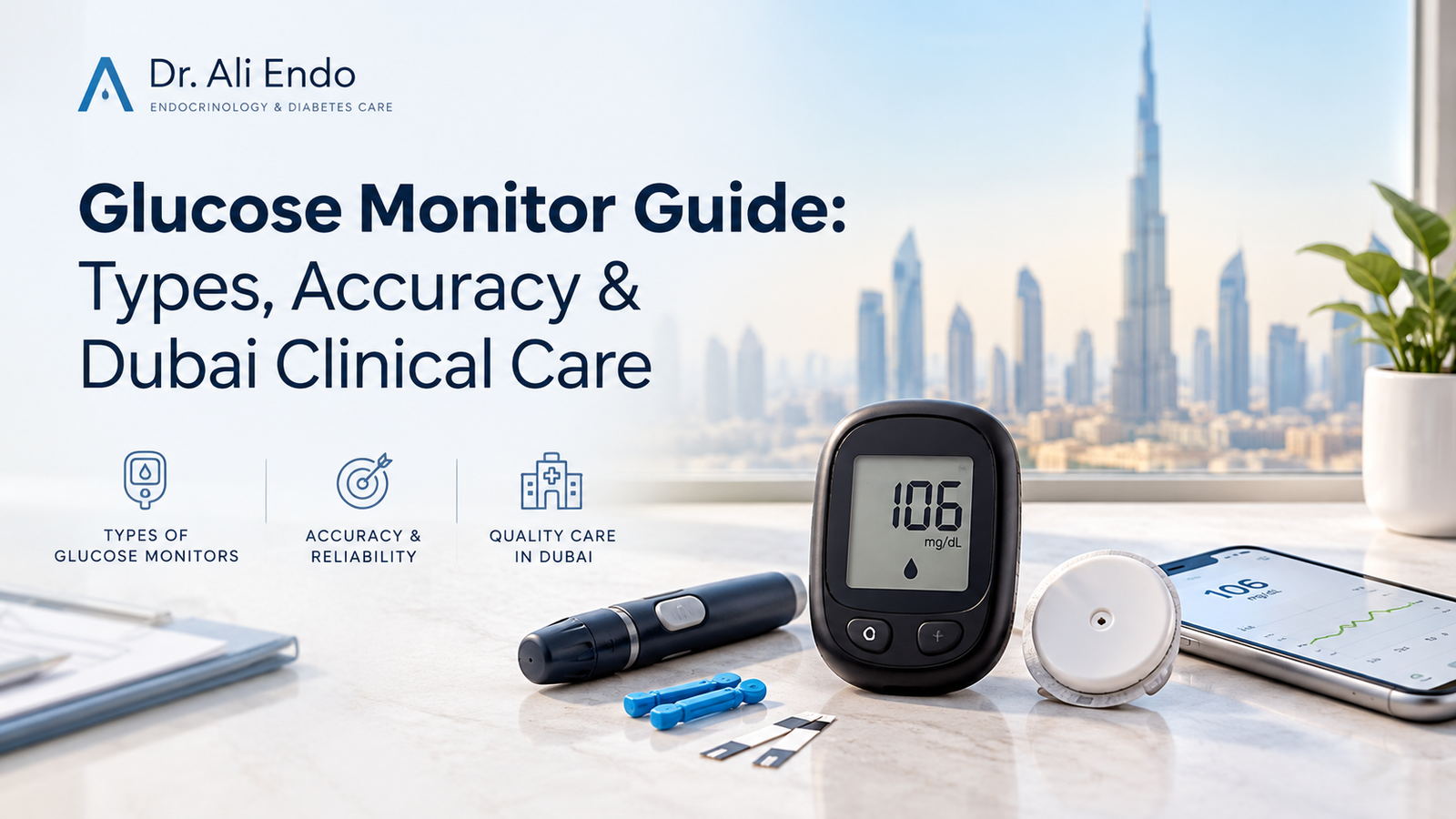
Clinically reviewed by Dr. Ali Aldibbiat, Consultant Endocrinologist in Dubai, specializing in advanced diabetes technology, metabolic disorders, and evidence-based hormonal health across the UAE.
Selecting the right glucose monitor transforms how you navigate daily metabolic stability and diabetes control. Modern monitoring technologies allow individuals to observe glycemic patterns in real time rather than relying entirely on isolated, painful finger pricks. Whether managing diabetes or metabolic health, choosing a clinically validated device ensures precise data for safer, tailored therapeutic choices every single day.
Key Takeaways
- Capillary meters measure immediate capillary blood, whereas continuous sensors assess interstitial fluid with an inherent 5 to 15-minute physiological lag.
- Over-the-counter metabolic biosensors cleared between 2024 and 2026 serve non-insulin users, but prescription continuous glucose monitoring remains mandatory for insulin-dependent diabetes.
- Clinical accuracy for a glucose monitor requires evaluation under ISO 15197 standards for capillary meters and mean absolute relative difference (MARD) ratings under 10% for continuous systems[1] [2].
- International standards target at least 70% Time in Range (70–180 mg/dL) while keeping Time Below Range under 4% to prevent severe hypoglycemia.
- Managing sensor adhesion in Dubai requires specialized skin preparation to counteract high heat, humidity, and perspiration.
Understanding the Modern glucose monitor: Capillary Blood vs. Interstitial Fluid
A blood glucose meter evaluates the exact glucose concentration in whole capillary blood drawn from the fingertip.
A continuous glucose sensor sits beneath the skin, analyzing interstitial fluid, which means the clear liquid surrounding your body tissue cells.
Because glucose travels from blood vessels into tissue fluid before cellular uptake, a continuous reading reflects a natural delay.
Why Is There a 5 to 15-Minute Lag Time Between Blood and Sensor Data?
Glucose does not transfer into interstitial tissue instantly. During periods of rapid glycemic shift, physical readings vary:
- After a carbohydrate-heavy meal, capillary fingersticks reflect glucose spikes approximately 10 minutes earlier than sensor scans.
- During strenuous aerobic activity or rapid insulin action, blood values fall faster than the sensor reports.
- When glucose levels remain steady, interstitial measurements and capillary finger pricks align closely.
How Does Sensor Glucose Compare to Lab Venous Plasma Draws?
Laboratory blood tests evaluate venous plasma, which serves as the gold standard for clinical diagnostic confirmation.
Both fingertip monitors and continuous patches provide real-time practical approximations rather than venous diagnostic benchmarks.
To calibrate baseline trends, patients frequently review their fasting blood sugar test parameters during specialized clinic consultations.
Glucose Monitor Categories: Traditional BGM, Prescription CGM, and Over-the-Counter Biosensors
Selecting an appropriate device depends on your therapeutic routine, diagnosis status, and insulin dependency requirements.
| Device Category | Measurement Medium | Primary Indications | Calibration Needs | Prescription Required |
|---|---|---|---|---|
| Traditional BGM (Fingerstick Meter) | Capillary Blood | Spot checks, acute symptom verification, insulin titration | Test strips with factory coding; periodic control solutions | No (Available over-the-counter) |
| Prescription CGM (e.g., Dexcom G7, FreeStyle Libre 3) | Interstitial Fluid | Type 1 diabetes, insulin-treated Type 2, gestational diabetes | Factory calibrated; optional fingerstick calibration on select models | Yes (Clinical prescription required) |
| OTC Biosensors (e.g., Dexcom Stelo, Abbott Lingo) | Interstitial Fluid | Non-insulin Type 2 diabetes, prediabetes, athletic metabolic tracking | Factory calibrated; no fingerstick calibration available | No (Cleared for adult non-insulin users) |
Traditional meters require manual lancing, test strip insertion, and meticulous sample handling for individual data points.
Prescription continuous systems transmit readings automatically every one to five minutes directly to smartphones or dedicated medical receivers.
These devices incorporate custom alarms that alert patients before dangerous hypoglycemia or hyperglycemia events occur.
What Is the Best glucose monitor for Prediabetes and Lifestyle Optimization?
Individuals addressing early insulin resistance or metabolic dysregulation benefit significantly from wearable sensor visibility.
Observing real-time responses to specific meals, sleep loss, and exercise promotes durable, sustainable lifestyle modifications.
Our team integrates continuous data with structured metabolic treatments to reverse insulin resistance before permanent beta-cell damage happens.
Recent Developments: The Emergence of Over-the-Counter Metabolic Sensors
Diabetes technology reached a historic turning point when international regulators approved over-the-counter continuous biosensors.
In March 2024, the US FDA cleared Dexcom Stelo as the first over-the-counter glucose biosensor for non-insulin users aged 18 and older.
Following this milestone, Abbott secured clearances in June 2024 for its Lingo and Libre Rio systems for health tracking.
How Do Wellness Biosensors Differ from Medical-Grade Systems?
While sharing core sensing hardware with prescription units, consumer biosensors feature distinct software safeguards:
- They disable urgent low-glucose alarms, making them unsafe for individuals using prandial or basal insulin.
- Data refresh rates are occasionally lengthened to preserve battery life for lifestyle trend visualization.
- Apps emphasize dietary coaching, macronutrient scores, and activity spikes rather than clinical insulin dosing calculators.
Non-diabetic individuals exploring these tools often evaluate their underlying metabolism by testing their fasting insulin level alongside sensor records.
Clinical Accuracy Standards: Decoding ISO 15197 and MARD Ratings
Understanding accuracy metrics prevents unneeded panic when personal monitor readings fluctuate unexpectedly throughout the day.
For traditional capillary meters, regulatory bodies enforce the international standard ISO 15197:2013 benchmarks:
- At glucose levels ≥100 mg/dL, 95% of readings must fall within ±15% of laboratory venous plasma values.[1]>
- At glucose levels <100 mg/dL, 95% of readings must fall within ±15 mg/dL of laboratory values.
- At least 99% of readings must reside within clinical risk zones A and B of the Consensus Error Grid, which is an error assessment chart that categorizes reading discrepancies based on whether they pose a clinical risk to the patient.
What Is MARD and Why Does It Matter for Continuous Sensors?
Continuous wearable monitors utilize Mean Absolute Relative Difference (MARD), which is a statistical calculation measuring the average percentage gap between sensor readings and synchronized blood tests, to benchmark device reliability.
A lower percentage reflects superior precision. Devices boasting MARD ratings below 10% are clinically approved for non-adjunctive insulin dosing decisions.
Key Glycemic Metrics: Mastering Time in Range, GMI, and Ambulatory Glucose Profiles
A single HbA1c blood test reveals a three-month average but hides dangerous daily swings and nocturnal lows.
Advanced endocrine care utilizes the Ambulatory Glucose Profile (AGP), which is a standardized one-page visual report that consolidates multiple weeks of continuous sensor readings into daily trend curves, converting complex data into actionable patterns.
Peer-reviewed research confirms continuous monitoring significantly improves glycemic stability and reduces long-term diabetic vascular complications (National Center for Biotechnology Information).
| Clinical Glycemic Metric | Target Standard (Adult Type 1 & Type 2) | High-Risk / Older Adults Target | Clinical Significance |
|---|---|---|---|
| Time in Range (TIR: 70–180 mg/dL) | Greater than 70% of the day | Greater than 50% of the day | Protects microvascular architecture; lowers kidney and eye risks |
| Time Below Range (TBR: <70 mg/dL) | Less than 4% (<1 hour daily) | Less than 1% (<15 minutes daily) | Mitigates acute hypoglycemia, cognitive impairment, and cardiac arrhythmias |
| Time Below Range Severe (<54 mg/dL) | Less than 1% (<15 minutes daily) | Near 0% | Eliminates neuroglycopenia, loss of consciousness, and seizure risk |
| Time Above Range (TAR: >180 mg/dL) | Less than 25% (<6 hours daily) | Less than 50% | Minimizes glucose toxicity, endothelial inflammation, and fatigue |
| Glycemic Variability (%CV) | ≤36% (Stable glycemic curve) | ≤36% (Stable glycemic curve) | Reflects meal and insulin stability; lower variability protects heart function |
Our comprehensive framework for diabetes management in Dubai relies on AGP interpretation to adjust therapies safely.
Evaluating your ambulatory curves ensures your treatment plan avoids both reactive high rebounds and risky overnight drops.
Sensor Placement, Adhesion, and Care in Warm Climates (Dubai and UAE Focus)
Operating a continuous glucose monitor in Dubai’s desert climate presents distinct challenges regarding high heat and humidity.
Elevated ambient temperatures and excessive perspiration undermine medical adhesives, causing premature sensor detachment.
Step-by-Step Sensor Application Protocol for Arid Climates
- Thoroughly wash the upper arm or abdomen application site with non-moisturizing, fragrance-free soap, followed by clean water rinsing.
- Apply a medical barrier film wipe (such as Skin-Tac or Cavilon) to construct a sweat-resistant foundation layer.
- Deploy the sensor applicator firmly against dry skin, holding steady pressure for five seconds after triggering the needle release.
- Affix a breathable, medical-grade kinesiology overpatch over the sensor perimeter to shield against friction during exercise.
Critical Storage Rules for Sensors and Test Strips
Never leave continuous sensors or traditional meter test strips inside parked vehicles, where cabin temperatures routinely exceed 50°C.
Extreme thermal exposure destroys the delicate glucose oxidase enzymes inside sensors and strips, skewing readings dangerously.
Store all diabetes technology supplies indoors at stable room temperatures between 15°C and 28°C away from direct sunlight.
When to Verify with a Fingerstick: Managing Lag Time, Compression Lows, and Rapid Spikes
Continuous sensors reduce lancing frequency significantly, but traditional fingerstick meters remain essential safety tools.
Relying blindly on a wearable patch without recognizing physiological artifacts can trigger dangerous insulin dosing mistakes.
Why Did My CGM Trigger a Low Alarm While I Was Sleeping?
Nighttime low alerts often result from physical pressure rather than a genuine drop in circulating blood sugar:
- Sleeping directly on your sensor compresses local tissue capillary beds, cutting interstitial fluid perfusion to the sensor wire.
- The artificial local deficit triggers a rapid sensor drop, setting off urgent alarms for severe hypoglycemia.
- Always sit upright and check a capillary fingerstick before consuming fast-acting rescue carbohydrates when symptoms are absent.
Why Is My Reading High After Intense Resistance Workouts?
Intense weight training triggers counter-regulatory stress hormones, including adrenaline, cortisol, and glucagon release.
These hormones stimulate hepatic glycogen breakdown, briefly raising circulating blood sugar despite energetic output.
Learn how to safely balance exercise-induced spikes by reviewing our guide on exercise for diabetes in the UAE.
Navigating Insurance Coverage, Pre-Authorizations, and Clinical Consultations in Dubai
Obtaining reimbursement for continuous sensors across the UAE requires adhering to specific health insurance protocols.
Regulators including the Dubai Health Authority (DHA) and insurance networks like Daman mandate documented clinical criteria before approving devices:
- Diagnosis of Type 1 diabetes requiring multiple daily insulin injections (MDI) or continuous subcutaneous insulin infusion (CSII).
- Type 2 diabetes accompanied by severe glycemic volatility, recurrent hypoglycemic episodes, or documented hypoglycemia unawareness.
- Comprehensive clinical documentation drafted by a licensed Consultant Endocrinologist demonstrating medical necessity.
- Submission of historical blood glucose logs, HbA1c evaluations, and therapeutic medication histories.
Under our clinical governance, patients receive end-to-end support for insurance pre-authorization and structured medical calibration.
Whether managing complex endocrine issues or seeking a type 1 diabetes specialist, physician guidance ensures your device delivers safe, actionable metabolic control.
Frequently Asked Questions About glucose monitor
How does a continuous glucose monitor work?
A continuous glucose monitor works by inserting a miniature biosensor filament beneath your skin into the interstitial fluid layer. The sensor utilizes glucose oxidase enzymes to generate minute electrical signals proportionate to sugar levels, transmitting encrypted real-time readings wirelessly via Bluetooth to your smartphone or medical reader every single minute.
Which glucose monitor is most accurate?
The most accurate glucose monitor devices feature clinical MARD ratings below 9% alongside ISO 15197:2013 compliance. Mode[1] [4]rn continuous devices such as the Dexcom G7 and FreeStyle Libre 3 deliver market-leading interstitial accuracy, while established capillary meters like the Contour Next provide gold-standard capillary blood verification for acute safety checks.
Can you buy a continuous glucose monitor without a prescription?
Yes, consumers can purchase over-the-counter continuous biosensors such as Dexcom Stelo and Abbott Lingo without a medical prescription. However, these consumer devices lack critical rapid-alert alarms for severe hypoglycemia and are strictly indicated for healthy individuals, prediabetes monitoring, or non-insulin-treated Type 2 diabetes cohorts.
Why does my CGM reading differ from a fingerstick?
CGM readings differ from capillary fingersticks because sensors evaluate interstitial fluid rather than direct capillary blood. This creates an unavoidable 5 to 15-minute physiological lag. During rapid glucose fluctuations, capillary blood registers changes first, whereas sensor outputs align closely once glucose levels remain stable.
Why do my sensor adhesives itch and peel off early?
Early peeling and skin itching occur primarily from localized contact dermatitis, trapped moisture, and excessive sweating in warm climates. Preparing skin with hypoallergenic barrier films, steering clear of fragranced soaps, letting alcohol dry thoroughly, and applying medical overpatches protects adhesive longevity throughout intense humidity and physical activity.
How long can you wear a glucose monitor sensor before replacing it?
Approved continuous sensors feature wear cycles ranging from 10 to 14 days, depending on the manufacturer and model. Attempting to restart expired sensors compromises medical accuracy because the microscopic platinum sensing filament degrades and progressive biological tissue encapsulation skews interstitial measurements.
What should I do if my sensor displays an error code after swimming?
Water pressure or Bluetooth transmission barriers through water can interrupt wireless device communication temporarily. If an error persists after exiting the water, dry the transmitter thoroughly and wait 30 minutes. Verify your blood glucose using a traditional fingerstick before making any medication decisions.
Resources and Further Reading
- National Center for Biotechnology Information (PMC): Peer-reviewed clinical evidence evaluating continuous glucose monitoring efficacy, telemonitoring compliance, and HbA1c reduction.
Grounding Sources
- [5] nih.gov
- [6] cms.gov
- Verification note: Fewer than three usable canonical authority links were returned. Manually verify unsupported factual claims before publishing.
Conclusion
Deploying a modern glucose monitor represents a profound shift from reactive symptom checks to proactive glycemic health. By understanding the biochemical lag between capillary blood and interstitial fluid, tracking clinical metrics like Time in Range, and protecting your device against Dubai’s unique climate, you can make informed daily decisions. Medical oversight ensures your data translates into safe medication adjustments, optimized nutrition, and enduring metabolic stability.
Ready to Take the Next Step?
Navigating modern diabetes technology requires expert clinical support tailored to your unique metabolic profile. As a Consultant Endocrinologist in Dubai, Dr. Ali Aldibbiat provides comprehensive evaluations, insurance pre-authorization documentation, sensor interpretation, and personalized management plans. Whether you are living with Type 1 diabetes, optimizing insulin therapy, or selecting your ideal glucose monitor, take control of your metabolic health today. Schedule a consultation with Dr. Ali Aldibbiat to discover the right monitoring technology for your health journey. Book a specialist consultation.